Melissa Jankowski
EVP, Director of Issuing at BBVA Compass
Houston, Texas
@mhjankowski | LinkedIn Profile
Melissa Jankowski is the director of Issuing at BBVA Compass, where she is in charge of the bank’s consumer and small business payments activities, including credit, debit, prepaid and personal line of credit payment solutions and loyalty programs. Before joining BBVA Compass, Jankowski was a senior account executive with Visa Inc., where she helped develop highly successful sales and marketing strategies for banks across the U.S. Before Visa, she was responsible for business development as a part of SunTrust’s merchant and credit card division. A 20-year veteran of the financial services industry, Jankowski’s background also includes sales management, risk management and training and development.
BBVA has made several strong acquisitions – including Simple – and has openly stated that it is focused on being a strong digital competitor in the global market. In your opinion what makes BBVA unique in the FinTech ecosystem?
BBVA Compass is transforming itself into a digital bank — a journey that began with an investment in a real- time technology platform and followed with BBVA’s acquisition of banking service pioneer Simple. Recently, the bank inked an agreement with payments innovator Dwolla, opening its real-time technology platform to the Iowa company — its first such move inspired by the open standards that pushed forward other industries. Rather than identifying digital innovation as disruptive or threatening, BBVA Compass seeks to collaborate with them, re-imagining banks for the 21st century and furthering its own digital transformation.
You’ve had the opportunity to work for both regional, super regional and now a global bank. In your experience, what are the key advantages and potential roadblocks between the different bank sizes?
In my opinion it is not about the size of the bank – it is about how the bank positions itself to acquire and retain its customers. In today’s market, most banks are trying to manage their business so that they are not disintermediated from their customers. And although there are several challenges banks face – including legacy systems, regulations and financial constraints – I think the two biggest challenges in today’s market are keeping up with the pace of technology and learning how to coexist with the fintech startups that are changing the face of the industry.
FinTech conferences tend to be male dominated, both at the podium and in the audience. Have you seen this changing over the past few years? Have you personally experienced a gender diversity gap at conferences and, if so, what actions have you taken to address the issue?
I am beginning to see more women participate as expert speakers and panelists at industry conferences, which is a great sign.
I think it’s important for women to take advantage of these opportunities when they are available and to proactively look for ways to share their expertise.
For example, I make myself available to women in the industry as a mentor and actively support organizations, such as W.net, which works to drive parity for women in payments.
Organizations like W.net bring women in the industry together to develop friendships and create mentoring relationships. I personally have found it engaging, insightful and it has helped my career.
You mentioned you’ve just returned from a mission trip to Kenya. What lessons/examples from this vibrant tech scene do you believe can be adopted by BBVA Compass?
I definitely learned a lot and came back with a new perspective.
While my trip did not allow me to interact much with FinTech I did learn that Kenyan drivers’ licenses are all electronic and loaded on their cell phones. I found that interesting.
I also learned that street merchants are finding unique ways to ”finance” their locations and expand. I was told that traditional banks in the market were not willing to loan money to merchants that did not already have significant funds deposited in their bank. Therefore, micro lenders were financing the merchant’s initial store front and helping to create a business plan that allowed the merchant to not only repay their loan, but build a reputable business that would enable them to expand into multiple locations. It was said that these new ‘banking’ relationships have created an interesting distraction for the larger financial institutions that are encumbered by the regulatory requirements which prohibit them from offering small businesses loans.
Whom do you consider to be the most influential in shaping your career from a mentorship or influential perspective?
When I look back on my career, I can think of several women – and men – who influenced me personally and professionally. I would first acknowledge my mother, Mary Jo Murray. Although my mother has never held an executive-level position, she has held roles that allowed her to lead by example and influence. She has a strong work ethic, is loyal to her employer, and she demonstrated the values necessary to succeed in any position regardless of the title.
Professionally, I have never had an official mentor, but one woman stands out for having shaped who I am professionally and how I go about navigating the corporate ladder. Her name is Denise White Tahali. She taught me how to manage my career, build and maintain a strong reputation within my company and the payments industry at large.
I met Denise while I was at SunTrust Bank. She led by example and ensured that she was accessible whenever needed. She had a healthy approach to managing her career and always knew what to say – and when not to say anything. I continue to respect her perspective and admire how she has managed her career.
Tom Sweeney, a former manager of mine at Visa, Inc., also took an interest in my professional growth and regularly carved out time to discuss my career. His guidance and influence can be seen in how I manage teams. I continue to reach out to him for advice and guidance.
What do you see as the three leading future trends for FinTech?
I believe that the three leading areas of focus for banks are upgrading technology, digitizing products and services and developing payments solutions that are unique in the marketplace.
According to the Millennial Disruption Index, 71% of millennials would rather go to the dentist than listen to what their bank has to say. And 53% of millennials don’t believe there are significant differences between banks.
Banks must understand these challenges and know that the slower they are in making the necessary technological upgrades and digital advancements, the harder it will be for them to retain customers and continue to grow their businesses. This is challenging when faced with tightened regulation and legacy systems that are difficult and expensive to manipulate and update. These challenges don’t necessarily encumber new FinTech players because they face less scrutiny and have a more agile working environment.
Who do you consider to be strong women leaders in the banking / FinTech space?
I look up to the following women in the industry: Elizabeth Buse, CEO of Monitise; Linda Perry, Consultant and Sheryl Sandberg, COO of Facebook.
Elizabeth and Linda both worked at Visa when I was there. Both held executive level positions of influence, and both were successful at navigating a male-centric environment. Elizabeth and Linda demonstrated that it is possible to climb the corporate ladder via hard work and dedication. They helped me understand that although the road can be long and difficult to navigate, it is possible.
Linda Perry is a co-founder of W.net, the networking group for women in the electronics payments industry. I admire the work she’s done to help facilitate the creation of valuable mentoring relationships for women across the industry.
Sheryl Sandberg has been a true inspiration to me. Her book, Lean In, ignited a nationwide conversation around women’s roles at work and at home.
Her assertion that women sometimes limit their own success resonated with me and many of my peers. She’s helped me think about things differently and has positively influenced the counsel I provide when mentoring other women.
What are the two or three recommendations you believe would be the most impactful for someone, especially a woman, just starting their career in Financial Services?
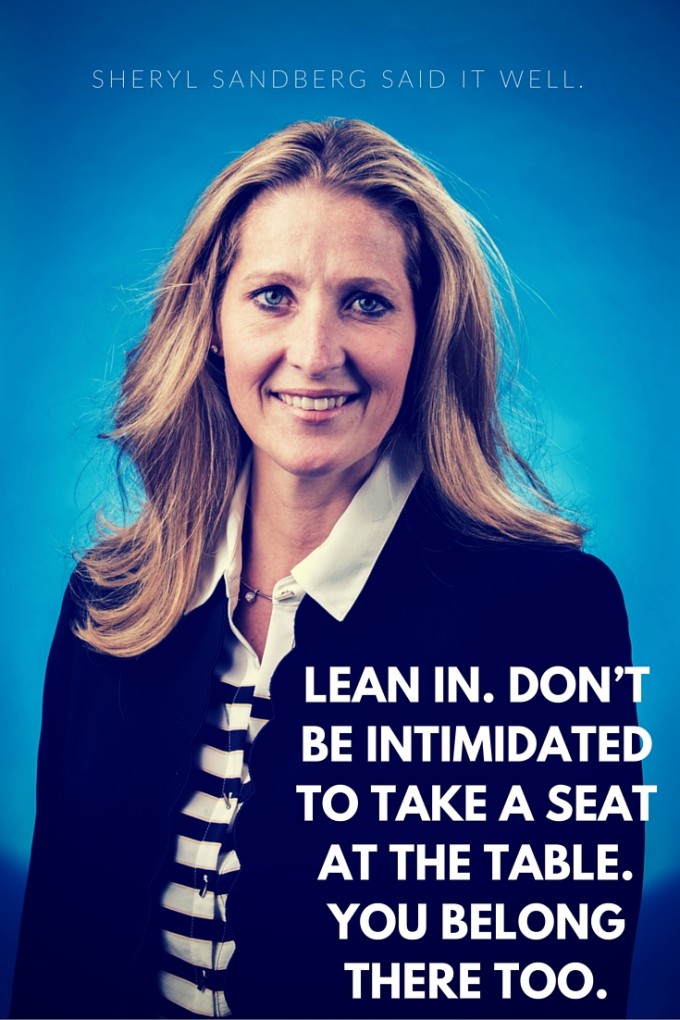
I believe that Sheryl Sandberg said it best: Lean in. Don’t be intimidated to take a seat at the table. You belong there too. Have confidence in your abilities and don’t let outside factors and expectations of marriage and children hinder your ability to continue to pursue the dreams that you have for your career.

© 2015 | FemTech Leaders
Start the conversation