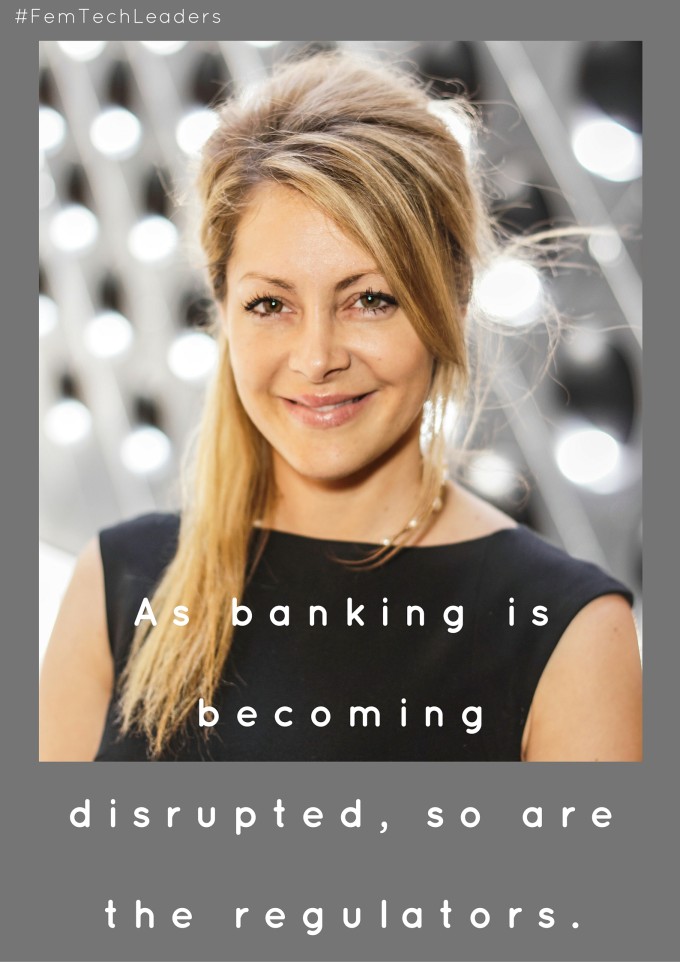
Amy Ciolek
Senior Associate at Ashurst
Sydney, Australia
@AmyCiolek | LinkedIn Profile
I am a senior associate in the financial services and products team, a subset of Banking and Finance. I work with Australia’s major banks, smaller banks, mutuals (community banks), non-bank lenders, foreign banking branches, and various other financial or credit service provider. I also work with industry associations, start-ups, existing clients looking at opening new lines of business, software companies and other businesses dealing with lenders etc.
Financial services is heavily regulated in Australia, and product design and promotion can be dependent on multiple pieces of law, exemptions, licence obligations, reporting obligations, and compliance. Generally, this is too much to cope with for the average financial services provider, so regulatory lawyers like myself assist with legal aspects. I am involved in structuring organizations for fund-raising, obtaining licences with the various regulators, designing products, obtaining exemptions, regulatory compliance, regulatory investigations, due diligence on portfolio or asset purchases, and assisting clients move their old processes into a digital environment in a compliant way.
Your early work experience was with law enforcement. How did you pivot to FinTech?
My early work in law enforcement was in an IT / law role in an agency which provided intelligence and forensics systems to Australia’s law enforcement agencies. The role involved understanding certain types of legislation, and designing IT systems that could be used by Australia’s various law enforcement bodies to help them in their job or collaborate with other forces. Sometimes, a highly innovative product could become available, but Australia’s law didn’t support the use, or the policing jurisdictions didn’t have the finding We would work with the legislature and policing jurisdictions to remove roadblocks to give the police better access to innovative systems which could save lives, or make their job more efficient so they can help protect the public and conduct their investigations with better tools. The work was heavily project based in a software development life cycle environment.
Meanwhile, I had accounting law degrees, so the transition into banking system design with a regulatory focus was a logical and natural progression. I then progressed into a law firm in the banking team.
Finally, with a highly flexible role in my law firm, trusting partners, and almost 15 years in the IT industry, I have been lucky enough to focus on fintech clients, and become involved in the fintech community.
What is the Australian culture like with respect to law firms and the practice of law? How as this influenced your approach to the marriage of this industry and FinTech?
The law is generally a slow moving creature. Generally, the legal profession is similar. Lawyers train very hard under their seniors, and it is a long slow progression through a legal career. Lawyers spend many years learning to do things the way their partners did things. Innovation, creative thinking, and an understanding of technology are not skills commonly practiced by traditional banking lawyers. This has been fine for a period, as large banks have also traditionally been slow movers.
However, now fintech has come along and is shaking things up!
Creative new products are forcing the finance sector to open their eyes. Regulators are more alert to the fact that innovative new products can achieve a better outcome for the general public, so are more open to exemptions. However, as banking is becoming disrupted, so are the regulators.
I am in a perfect position to understand things from the fintechs’ side, from the regulators’ side, grasp technical limitations, and identify legal implications. This presents a great opportunity for me to assist my fintech clients, educate the fintech community, get my colleagues involved with fintech initiatives to expand their horizons, and become involved with regulatory efforts to understand fintech.
You are very active in the Sydney FinTech community. What type of activities do you engage in and are you able to do this through Gadens?
Sydney has a great fintech meetup culture. Its possible to attend at least one if not more meetups a week. These generally involve an educational session and a networking session. The vibe is always great and its wonderful to start to meet regular participants who share the same interests. I write articles through the law firm, and we run fintech meetups for the industry in general, as well as for special interest groups such as cultural affinities. We enjoy working with startups and help where possible with a shared and collaborative approach in an attempt to reduce costs and barriers to entry. I’m involved in the upcoming HashChing growth hacking comp which should be fun!! We also assist startups with pitching coaching, exploring their ideas further, with general regulatory guidance, and connect to other players in the industry.
What specific areas of FinTech are you drawn to (you mentioned alternative finance)?
Alternative finance is my favourite because its great to get involved with innovative products and design something unique. Some of the new credit assessment technology is also interesting. It makes you think about what you do in your daily life, and whether that may become an input to your credit application one day. A client mentioned that even the brand of biscuit someone buys can contribute towards their credit worthiness algorithm in a decisioning engine. I am now very cautious of my grocery habits when paying on card.
How would you describe the relationship between regulators, the banks, and the Fintech community in Australia?
Strange.
The regulators have big job ahead. They are very focused on maintaining the trust and confidence in the Australian financial services industry. At the same time, they are trying to adapt. Academics are assisting, but industry involvement is critical.
Its difficult for the industry to appreciate the difficulty that the regulators are facing when fintech moves so quickly and the law moves slowly.
Banks need fintechs for their nimble and innovative product. There is still a strong disconnect or lack of trust.
Who(m) do you believe has had the most influence with respect to your own career?
My partner (boss in my practise at the law firm) is amazing. He is at his desk at 7.15 every morning, works fiercely, has an amazing work ethic, and attempts to be a business ‘enabler’ not a dis-abler. He is involved in a range of different industries with law being the foundation, and he is the most selfless and generous person I have met. I truly aspire to be like him, and if I can adopt just 10% of his qualities, I will consider myself successful.
I don’t really have a mentor, but believe that everyone comes into my life for a reason, so I attempt to look for their best qualities, and learn from everything that the universe offers.
What do you see as the 3 leading future trends for FinTech?
Australia is only just beginning to see peer to peer lenders, and they are not really even true peer to peer in the sense that it is in the UK or US due to legislative restraints, product design, and licensing limitations.
I would love to see more wearables and contactless in Australia. We love out contactless, and its fun.
Finally, crowd-funding has a long way to go in Australia. The government recently issued a discussion paper on crowd funding, but unfortunately the cost of licensing and compliance could easily hit over $100,000 which is prohibitive for so many startups.

© 2015 | FemTech Leaders
Start the conversation