Barbara Holzapfel
Chief Marketing Officer at Addepar
San Francisco, California
@bnholzapfel | LinkedIn Profile
You are originally from Germany. What led you to a career in the U.S.?
I was fortunate to complete an MBA program in the US through a scholarship. This opened up a completely new set of possibilities and I started my post MBA career at The Coca-Cola Company at its Atlanta headquarters in strategic marketing. -It was a very rich experience that taught me the timeless principles of truly understanding the behaviors and motivations of consumers, customers, clients, users and how to translate that into impactful marketing and product strategies. These concepts are experiencing a renaissance in tech as design thinking and design driven culture.
One of your earliest experiences of your career concerned helping a West German company expand into East Germany during the country’s re-unification in the early 90’s. What key lessons did you learn from this experience?
It was a fascinating experience very similar to a startup. This might sound counterintuitive as I was sent to Eastern Germany by West Germany’s largest bank. It was a true ‘roll up your sleeves’ experience for a 20 year old where I got to wear many different hats: ranging from setting up retail banking outlets, to working on mortgages and financing entrepreneurs. All this against the backdrop of the most significant political change for my generation in Germany: the fall of the Berlin Wall and the resulting re-unification of a country divided for 40 years and at the center of the Cold War.
What was your experience as a young female leader? You mentioned you were responsible for a team of 20 individuals. How did you win their respect?
I graduated business school quite young. When I arrived at The Coca-Cola Company, I was put in charge of a team of about 20 people, all older and with more work experience. Plus, at 5ft 3, most of the team members towered over me. So I asked myself the question: Why would these people take any direction from me? This led me to one of my fundamental leadership beliefs, i.e. that you need to lead in a collaborative, ‘leader as coach/mentor’ style fashion and from the front lines. This was a key moment in my career that has helped me to develop what I describe as the “VIE” leadership style (la vie in French means life): Vision, Inspiration and Engagement. As a leader, you need to have a clear vision of the future of the company, organization, team or project; you need to inspire people to align behind this vision and engage them through collaboration, open communication and an environment where people can take risks.
You are an active writer and contributor to multiple publications. What is it about the writing process that you enjoy?
I enjoy looking at a question or problem holistically to identify patterns and create new concepts. This involves articulating key ideas, discussing and sharing them with others, either in written form or brainstorming on a whiteboard. In marketing and strategy, it is paramount to articulate ideas and concepts very clearly - a lot of open questions get solved and clarified when you start writing that first positioning statement.
How important is cultural awareness for leaders today in our global economy?
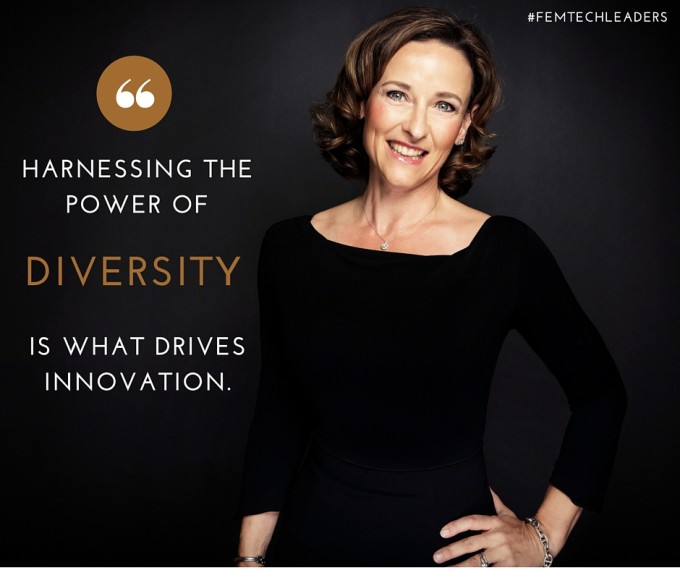
As we live in a hyper connected world where you can reach someone in a country at the opposite side of the globe with the press of a button, understanding - and more importantly - appreciating cultural nuances is key. At the same time, cultures that used to be defined by nationality and physical borders have morphed into globally distributed subcultures: how similar/different is a teen listening to a particular kind of music to his respective countrymen compared to teens across the globe? Having worked in 3 different countries (Germany, US and UK) and with people from across all continents, backgrounds and beliefs I have developed a great appreciation for different perspectives and the nuances behind them. The best teams I have worked with were the most diverse - in terms of culture, background, beliefs and gender. Harnessing the power of diversity is what drives innovation.
How important has mentorship been for your own career growth? Are you an active mentor?
A career is never a straight line and can often feel like a jungle gym. Having mentors and your own ‘advisor board’ is such an important factor to make it through the maze. I have been extremely fortunate to have had great mentors over the years. At the same time, I have been actively mentoring women to help them make their way through their own maze. I have learned a lot from my mentees and hope that I have been helpful to them. Mentoring is a two-way street.
Who(m) do you believe has had the most influence with respect to your own career?
There have been a number of people who have significantly shaped my career.
- My family & friends: my parents gave me wings and roots, the courage to explore the unknown and the comfort of the familiar; my husband has been a true partner who supports me and challenges me at the same time; my 6 year old son who is teaching me to look at things with a fresh perspective; my friends keep me on track when I spend too much time in my head.
- Professionally: At my first job at The Coca-Cola Company I had the opportunity to work with Grant McCracken, a well-known anthropologist and expert in ethnography. Working with him has shaped my most fundamental thinking in marketing to this day. Vinita Bali - my first manager at The Coca-Cola Company is one of the most strategic marketing minds I have met; Dr. Peter Graf hired me into SAP and was my manager for half my career there and turned into a mentor: a gifted product marketer with an innate ability to articulate highly complex topics into inspiring and easy to understand language.
Who do you consider to be strong women leaders in the FinTech space?
I think about it less as in ‘fintech’ but about tech more broadly. I had the opportunity to meet Sheryl Sandberg about 2 years ago and her contribution to the conversation about women in tech is game changing. I remember a specific keynote she did at the Anita Borg Institute’s annual Grace Hopper Conference for women in computing where she talked candidly about her experience as an economist in the tech world, rather than being a technologist herself. She’s really the first one who has elevated the discussion. Through my work on the Anita Borg Institute’s Board of Trustees, I have had the great opportunity to meet a number of very strong women leaders in tech through ABI’s annual Women of Vision event.
What do you see as the 3 leading future trends for FinTech?
Technology is truly transforming finance in the broadest sense. We’ve seen a lot happening in the b2c fintech space, payments etc. Consumer grade technology will transform the b2b side of the equation, built on powerful platforms connecting the network of players, ranging from financial institutions, VC funds, PE funds, wealth managers, all the way to endowments, foundations, sovereign wealth funds, pensions, insurance companies and the like. Technology will help break down the walls that have existed for so long between different players in finance and help them evolve into an integrated and investor-centric network.
About Addepar:
Addepar provides technology to unlock a modern world of finance:
- We are building a new category of investment management technology for instant insights into any portfolio
- We empower investors and advisors to make complex portfolios easy to understand and make data driven decisions
- We arm the global ecosystem of investors, advisors and service providers with a modern platform

© 2015 | FemTech Leaders
Start the conversation