Cathy Pin
Head of Global Payment Solutions at CGI
Activator at SheEO™ Inc.
Toronto, Canada
@IamASheEO | LinkedIn Profile
Can you please describe your role and responsibilities for CGI?
As the Director of Global Payment Solutions, I’m responsible for setting the product direction and go-to-market strategy for CGI’s suite of payments solutions, which includes our payment service hubs, payment engines, financial messaging and watchlist sanctions filtering solutions. Fundamentally, my role is to help our clients and CGI team members be successful!
Working directly with clients and CGI product specialists, I develop solutions that include business consulting, software applications and systems integration services, to address our clients’ current and future payments challenges. This is not something I do on my own. Guiding and mentoring our CGI team to be successfully professionally and with our clients is an important part of what I do.
You had a successful career at BMO. How do your previous roles at the bank assist you now that you work for a service provider?
Financial institutions are large, complex entities with multiple stakeholders and priorities and varied cultures. At the heart, they are complex and complicated organizations protecting money and data in order to make their clients lives better. Understanding that, and living in that environment gives me the insights to create and bundle solutions that make sense to all levels of bank stakeholders, from product, operations, IT, compliance, marketing and so on.
How did you become involved professionally in the payments space?
I have always had a passion for the underdog. When I first got into managing BMO’s ATMs in 1998, ATMs were expected to go the way of the ‘dodo bird.’ My role focused on communicating the importance of this channel to gain leadership attention, resources, and ultimately funding, to enhance the client experience; much like the little cartoon dog in Looney Tunes who continually jumps up and down saying ‘What about me? What about me?’
Persistence and ultimately regulatory changes in the market paid off, attracting the required investment dollars. As I moved into other roles such as managing cash management products and the small business segment, payments was often the forgotten yet critical piece of the client experience. So I continued to be the ‘What about me?’ cartoon dog asking for funding. I thrive with the challenge of raising the profile of the underdog.
Payments are critical to everything in financial services and in any commercial transaction. In the past, no one paid attention to payments until one went missing or was delayed. Then, 2008 happened. Payments are king, or should I say queen, post the 2008 crisis. Financial markets now understand and value deposit balances and understand that those balances are a function of account primacy or where the bulk of payments land.
What do you consider to be the biggest changes to the payments space since the market crash in 2008?
There is an enhanced awareness of the value of payments within financial institutions at a time when external market forces are putting pressure on payments.
- New entrants are challenging the banks’ positions. Organizations like PayPal, Uber, Airbnb, Apple Pay and the plethora of others that crop up every day, in aggregate, will make a significant impact on the banks’ payment streams. It may be tough to see the impacts one by one; instead it will likely be death by a thousand little cuts.
- There also are rising consumer expectations with zero or minimal tolerance for anything that takes too long or does not provide the transparency consumers are used to with other transaction platforms like shipping. It is a challenge to provide this transparency when payments ecosystems are distributed and most likely legacy systems.
- New technologies are driving significant innovation. Banks are culturally risk averse; bank leaders do not take risks with people’s money. Distributed financial technologies will fundamentally change everything. Financial institutions want specific answers and use cases, but the reality is we have not dreamt up all of the potential use cases for this new technology. Bringing this unknown into a financial institution without extinguishing the innovation is a real challenge.
The big buzz word in financial services right now is ‘blockchain’. Do you think most of us really understand the impact of the changes ahead of us?
Absolutely not. I believe we have just started with the most likely use cases of correspondent banking, trade finance, and smart contracts. We have also seen this new technology start in payments and is already migrating to other spaces such as the distribution of music. Who would have thought music publishing was a possibility with blockchain technology? Imogen Heap did and released music using blockchain technology.
Financial institutions are in the business of certainty: certainty of payment, certainty of loan repayment, certainty of wealth accumulation. Yet, there is so much unknown about how this new technology can be leveraged. It is easy to incubate this payment innovation within a protected area in a financial institution, but tough to commercialize it when there are so many unknowns and stakeholders to appease.
The other big buzz word in financial services is ‘legacy systems’. What approach should banks in particular take with respect to these systems in your opinion?
In-place modernization. It is very difficult to develop a positive business case for payment system replacement given the cost and risk associated. Replacing one payment engine like a wire engine with a new wire payment engine results in a wire. Instead, financial institutions should push their legacy platforms to be more open and transparent with web services, workflow, and incrementally moving common services out of the legacy platform if the payments platform works, why change it? Organizations may be pushed to change to address increasing risk requirements, customer expectations for more transparency or to manage staff with limited knowledge about a particular technology platform. Organizations like CGI have the knowledge to own legacy platform, manage the risk and give banks the capacity to focus on building the bank, not running the bank all learned through the 40 years’ experience we have developed building, implementing and supporting payment systems around the world.
Banks also need to focus on the front end unlocking value for their customers through improved payments transparency, timeliness, bundled solutions, forecasting tools and more. That is where they will drive revenue and customer loyalty. Do not let the technologists be enamoured with the bright and shiny new platform, instead base the transformation on creating/unlocking business value incrementally over the lifetime of the payment modernization.
What is the value add that CGI brings to their clients with respect to payment systems?
Modernizing payments ecosystems is a significant bank transformation that can make or break careers. To minimize the risk, it is critically important to work with a partner that has the experience and depth in payments, someone who has ‘been there and done that’. CGI brings 40 years of global payment expertise working on significant transformations with banks and central banks. We have the payments knowledge, leadership and experience needed to transform.
Transformations can take 5 to 8 years as a result is also important to work with a partner that has the financial stability and governance models in place to successfully drive the change. CGI is an IT services and integration company at its core, more than a product company. As a result, we know how to build solutions that can be implemented successfully. We are a solid partner with strong financial performance, client satisfaction and loyalty scores, and successful project delivery results to support that.
Lastly, CGI has a history of payments innovation having worked on significant payment changes such as SWIFT, SEPA, and more recently, Instant Payments in the UK. At a time when new FinTech solutions are emerging daily, we are a safe pair of hands to partner with and facilitate this innovation. We are currently integrating the Ripple Connect solution within our own suite of products, enabling payments through a proven settlement engine, bringing practical innovation to our clients.
You’ve been very successful professionally. How do you decompress from your demanding role?
There are two simple guidelines I use to keep myself grounded:
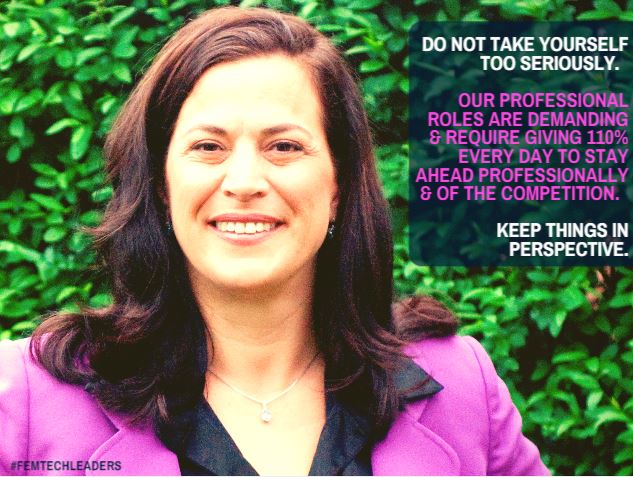
- Do not take yourself too seriously. Our professional roles are demanding and require giving 110% every day to stay ahead professionally and of the competition. Keep things in perspective.
- Remember to care of yourself with things and activities that energize you. For me, this means getting outside, exercising, walking my dog, playing with my children, nieces and nephews, and laughing!
Who(m) do you believe has had the most influence with respect to your own career?
My father had the greatest impact on me. Unfortunately, I did not realize it until he was gone. He was a role model and instilled a strong work ethic in my sisters and I with a ‘can do, get it done’ attitude, and the respect that no job is too small for anyone. He emigrated to Canada post World War II with little schooling and no money. He built up a successful business for his family taking some pretty bold risks along the way. I wish he was here today to bounce ideas with so that I could continue to learn from his experiences.
Who do you consider to be strong women leaders in the FinTech space?
I like to think about this group in three different categories:
I admire the creative, risk takers who start things, like Kristy Duncan – building and expanding globally the Women in Payments franchise- and Wendy MacKinnon-Keith of Digital Retail Apps. Wendy saw an opportunity to improve the shopping experience and built a mobile app to do so.
I also admire the corporate leaders who successfully manage multiple stakeholders and engage large and distributed teams to build innovative solutions such as Linda Mantia of RBC and Ellen Richey of VISA.
And, I admire those who are driving new technologies, like Blythe Masters.
These strong women leaders all demonstrate their ability to navigate the complicated payments ecosystem, engage the right stakeholders and create alignment to drive change.
What do you see as the 3 leading future trends for FinTech?
First, distributed financial technologies will continue to drive significant change in financial institutions and create disruption. Ripple is the most visible of these driving change in the market. There will be many more to follow, so it is important to understand and watch what is happening in this space.
Second, regulatory compliance continues to increase and FinTech start-up companies are expected to develop creative solutions to the challenge. This will be an area of focus and investment in my opinion.
Third, so far, FinTech has been focused on traditional banking. I expect the focus to migrate quickly to the insurance industry given there are many opportunities to create efficiencies.

© 2015 | FemTech Leaders
Start the conversation