Chitra Dorai, PhD
IBM Fellow, VP & CTO Cognitive Services at IBM
New York City, New York
@ChitraDorai | LinkedIn Profile
Your name means ‘painting’ in Sanskrit. How prophetic was this considering your history of data visualization?
The meaning of my name has definitely been prophetic, considering ‘paintings’ and the like sparked my interest from a very young age and seamlessly aligned with the trajectory of my career. All my life I’ve been fascinated by images, both still and moving. The way you can assemble images together to create a compelling narrative, and principles that have emerged underlying their manipulation to create art, interests me so much that I did a project earlier in my career on automated movie analysis. Please see my book on Media Computing: Computational Media Aesthetics resulting from that research.
Were you always interested in mathematics growing up?
Yes. When you are born and raised in India, you learn many languages. Mathematics, the language of science, was just another language for me to learn. I love solving puzzles, and math was the perfect medium for me to test them. And just like I do for many languages, I also appreciate the elegance and clarity you find in mathematics.
You initially wanted to be a neurosurgeon. How did this shape your future studies?
By age 10, while many kids were into dinosaurs, I knew I wanted to become a neurosurgeon - a brain scientist. I read to try and understand how the brain works. I wanted to know what scientifically happened when I learnt something, how I remembered what I read, and most self-reflectively why subjects like mathematics were so easy for me. If only I could understand what happened in my brain when I learnt something new in mathematics, and if we could somehow replicate it then everybody would be proficient at it, so I thought at that age.
Given that passion for learning early on, it was very clear what my path would be. Fast forward to when I went onto to study electrical engineering at IIT, then earned a Masters at the Indian Institute of Science, where I built my first computational model of a self-organizing neural network for locus-addressable associative memory that would learn to recognize objects from images. The highlight was partnering with a neurologist and building neural network models to understand what goes on in the brain, just like I dreamt as a kid.
I came to the U.S. for graduate studies, earned a Ph.D. in Computer Vision, continuing my passion to make computers understand what’s in images, and joined IBM Research. Now about 20 years later, I am with the Global Business Services as the CTO of Cognitive Services, working closely with clients to make cognitive computing real for different businesses.
IBM named you an ‘IBM Fellow’; quite the honor. What is it about working at IBM that you enjoy so much?
There are several things I enjoy about working at IBM, but there are a couple that stand out. First, given IBM’s global presence, there are a plethora of impactful issues to address that have real societal implications, and having a positive impact by taking on those problems has kept me interested throughout my career.
Second, there are so many opportunities to reinvent my career progression. I was a researcher for a bulk of my career, and then I was able to move into a business unit as I wanted to make a real impact with client problems. Through the analytics solutions I developed with my colleagues, we were able to help thousands of struggling home owners through various home ownership retention programs and alternative workout options during one of the most challenging times in the history of the U.S. housing market.
Given my innate desire to solve different problems at different times, this mixture of the freedom to reinvent my career and the access to problems that need solving has been a perfect formula that has made me very loyal to IBM.
How good of a job are we doing on educating the general public on importance of AI?
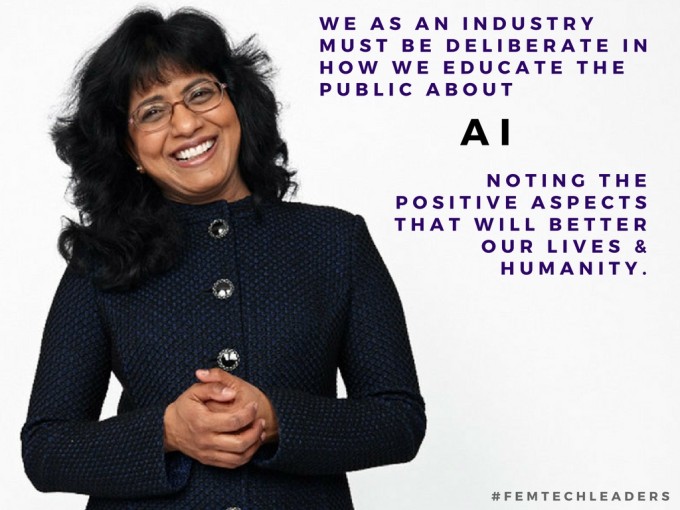
In many ways we have been raising excitement around the importance of AI, but that has been coupled with raising fears as well. We as an industry must be deliberate in how we educate the public about AI, noting the positive aspects that will better our lives and humanity. I tend to subscribe to the notion that we should lessen the practice of using anthropomorphic terminology when we are discussing AI. Look at it as more of our continued engineering effort to automate tasks that demand human effort and attention, expanding to even reasoning- and judgment-oriented tasks. We certainly need systems to augment our capacity to analyze and discover and to make better decisions given the explosive data growth in the digital universe.
During one of your many video interviews online you mentioned a huge issue with lending is the end-to-end view of risk (the entire lifecycle of a loan). How can data analytics help with this?
As it happens in the lending industry, risk is assessed at specific, different points in the life cycle of a loan – the time when application is made, or the time when someone falls behind in their mortgage payment, for example. What is really needed is a continuous and dynamic update of a risk profile of the loan underpinned by the changing (risk) profile of the person(s) holding the loan, of the collateral which in the case of a home mortgage would be the property, as well as by changes in the economy, job markets, etc. Such a continuous insight into risk would help anticipate any future events, such as borrower default, so that lenders can take action more proactively to serve the borrowers better as well for better risk management.
Having a deeper understanding of a prospective customer in terms of their continuous potential to repay a loan and by their willingness, rather than seeking a risk estimation only at certain points of the loan life-cycle, reframes the entire risk profile. Data analytics helps to continuously analyze a person’s behavior, and allows the lender to assess risk at any given point in the lifecycle of a loan. This is very transformational because risk assessment is no longer reactive and event driven – customer data and insights extracted from that can provide banks deeper knowledge about a person and their capability/willingness to pay, changes in behavior mediated by everything happening in their life, for the first time.
Do you feel we are making progress in encouraging women to participate in STEM studies and careers?
Reflecting back on when I started my career, and looking around at where we are now, we have definitely made progress. We continue to try to improve the participation. I try to do my part through mentorship. I have mentored plenty of university students, in undergrad to doctoral programs, but recently felt that it was important to focus earlier than that – on school years to build a strong pipeline. The earlier we instill an interest and get women excited and passionate about STEM topics, the better chance we have of getting them hooked on these fields of study and seeing them continuing in the field.
Who(m) do you believe has had the most influence with respect to your own career? Why?
Isaac Newton said, “If I have seen further it is by standing on the shoulders of giants.” I relate to that quote because I have been singularly fortunate throughout my life to have had a very strong support system of parents, teachers, colleagues and friends who have all been instrumental in contributing to my ideas and shaping my career progression. And of course, providing needed critique!
Writings of great scientists have also greatly influenced my career, such as those of Richard Hamming. It was he who said, “If you do not work on an important problem, it’s unlikely you’ll do important work.” I’m sure it’s clear by now that has been the undercurrent of everything I do. I always ask myself if I am doing something to address an important problem in the area I’m working in at any given time. This advice has helped me to go after tough problems, slog through the challenges, and in the process learn more about myself and how to be of more value.
Who do you consider to be strong women leaders in the FinTech space?
This is such a great time in the FinTech space with so many strong women leaders. Projects with societal impact have been a big calling for me. So when I read about Fereshteh Forough, the CEO and Founder of Code to Inspire, I felt what a change maker she is! She is focused on teaching Afghan women how to code paving a way for them to find jobs and bringing them hope and opportunity. That is awe-inspiring leadership!

© 2015 | FemTech Leaders
Start the conversation