Carol Hargrave
Chief Marketing Officer at Klarna
@HargraveCarol | LinkedIn Profile
You have a varied and extensive experience working for a global bank (Citi), a global payments disruptor (PayPal), a FinTech start-up (Bill Me Later), and now a highly successful FinTech company with Klarna. How would you describe the difference culturally between the different types of business?
Well I certainly enjoy payments marketing. I held a variety of roles at Citi, but always gravitated to more entrepreneurial roles within the bigger organization. I worked on a startup within the old Associates business (acquired by Citi) focused on a partnership with GTE (later Verizon). And later I moved to Atlanta when Citi acquired The Home Depot portfolio from GE Capital. That was very much a start-up business within the broader Citi business. So when I had the chance to join the Bill Me Later startup, I jumped on the opportunity. When I worked on The Home Depot business at Citi, we had a start-up culture, but with the benefit of the infrastructure and budgets of a big bank. At Bill Me Later, we had to build those things ourselves. I like being a part of a team that builds things, and I like having limited resources that force you to really focus on what’s important and what’s going to drive the business forward. Even though Klarna has been around for ten years and shouldn’t be called a start-up, we still manage to do that very well. The rapid growth and high ambition of the company is also still very much like a start-up.
Much has been written about the convergence of the CMO and CIO executive roles. Do you subscribe to the theory of the blending of these two roles? What do you believe is driving this?
I think part of what’s driving the blending is the convergence of technology and data in the marketing profession. Successful marketers need to leverage the available data in ever changing and ever expanding ways. And we need state of the art technologies to manage all of it. Whether the roles actually converge, the disciplines are certainly doing so. In addition to knowing how to use data, marketers have become technology experts. At Klarna we are in the absolute forefront of new technologies as they emerge, and we have to be, because our competition is there.
What has your experience been like working for a Nordic company as an American expat?
I moved to Stockholm last September, so I’ve been here almost exactly a year now. There are of course differences. The coffee is much better! But I’ve found more similarities than differences, and more things that are complementary than conflicting. Swedes are known for liking consensus and I’ve found this to be true. But the time that it takes to come to consensus seems to minimize the time and effort that all of the back channeling takes in the US. I think both cultures have pros and cons.
The Nordics are consistently rated as one of the top regions for quality of life, innovation, and for women leadership. Why do you believe this is the case?
Sweden has invested heavily in their quality of life and built a social safety net for everyone. All Swedes have health insurance, parents (both mothers and fathers) get long leaves when their babies are born, unemployed get money from the government and child care is subsidized. I think knowing that these basics are cared for ensures that people can focus on innovation and helps them to be braver in their decisions. Sweden is the startup capital of Europe. It’s partly because Swedes know there are only 9.8 million Swedes in the world and they have to think globally right away. But I also believe that it’s because they start from such a high quality of life in the first place.
Several countries, including Sweden, have adopted quotas with respect to the number of woman board members. According to a 2015 Catalyst study, companies listed in Stockholm have women in 28.8% of their board seats, ranking Sweden fourth on Catalyst’s census. Are you in favour of this type of governmental approach to address the gender diversity issue corporately?
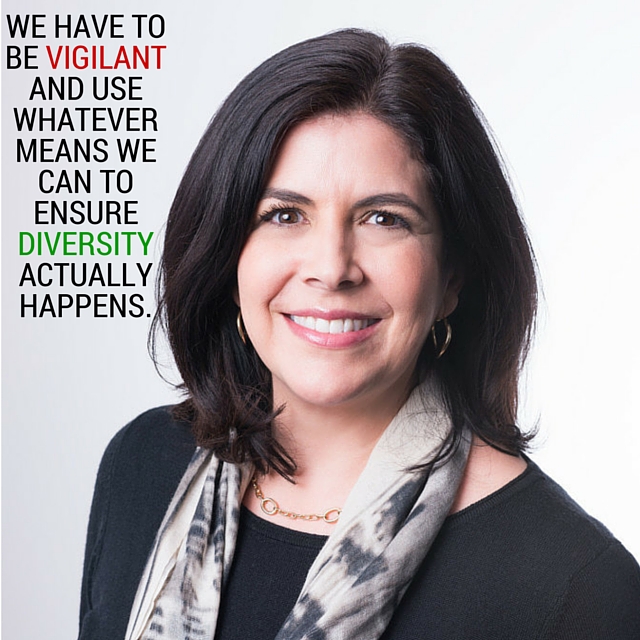
I’m in favor of gender diversity. Period. It makes companies stronger, and the data proves it. Companies should embrace it and not settle for the status quo. Until then, we have to be vigilant and use whatever means we can to ensure diversity actually happens. Even if it means governmental intervention. But I can’t wait for the day when it isn’t necessary.
What recommendations would you provide other women who are interested in pursuing an expat opportunity?
I’ve talked to several. And most have declined the opportunity. But to be fair, so have the men. I have always been a risk taker, and it has paid off in my career. An expat opportunity is one of the best ways to grow your experience and to get noticed by employers. But also to develop as a person by learning new cultures and ways of working. My best piece of advice is, just do it. Find a way and jump in. It’s a great experience.
What do you see as the 3 leading future trends for FinTech?
I think the sharing economy will continue to push the limits of what consumers think about when they consider their banking relationships. Crowdfunding and peer-to-peer lending will continue to push into this space and they will start to feel mainstream, making users naturally question their old banking relationships more and more along the way.
Consumers will demand a better user experience and get more transparency and openness from their banking and payments relationships. Payment providers and banks that fail to deliver transparency and a great experience will cease to exist in the mind of the consumer. Consumers are in the driver seat more than ever and that trend will continue to push forward in many industries.
Mobile e-commerce will explode because fintech will finally enable it. This will have major ramifications for retailers as they have to retool on all levels for consumers who will want to engage with their mobile device as well as a store associate to make their purchases. Just like Instagram, if it doesn’t happen in their phone, it doesn’t really happen.

© 2015 | FemTech Leaders
Start the conversation