Allison Miller
Ads Risk at Google
President, Board of Directors at Society of Information Risk Analysts
Director, ISC2 Board of Directors
@selenakyle | LinkedIn Profile
San Francisco, California
Google is a global technology leader focused on improving the ways people connect with information. Google’s innovations in web search and advertising have made its website a top Internet property and its brand one of the most recognized in the world.
Allison leads product management for the Risk Engineering within Google Ads. Risk runs the automated fraud detection systems that screen for payment fraud, terms abuse, and other egregious policy violations.
You have a very strong background in data security / risk information. What do you believe are the one or two areas that are most at risk for the average consumer?
The big one is - personal data! But there are some great authentication tools for the average consumer to protect themselves and their data, especially online. I recommend using password vault software and picking different, difficult passwords for every online system where you have an account. Then you only need to remember a few passwords. I’m also a big fan of two-factor authentication - that’s when a site uses something besides your username and a password to confirm your identity when logging into a system. That’s a great trend that has expanded beyond financial services to other online, consumer facing services like email and social networks. Very useful.
Consumers tend to be targeted by scams, too, and those scams may be coming at you on your landline, your mobile device, or on the web. The best defense here is critical thinking: pause for a moment before you click, download, or provide anyone with personal details or passwords. If you’re faced with a login screen, did you go to the site/app on purpose?…Or did it just pop-up and ask for info? If you get a phone call from someone claiming to be tech support, is this because you called them?…Or did they call out of the blue to offer help you didn’t know you needed?
Protecting consumers online presents real challenges; one of the reasons I’ve been getting more closely involved with the ISC2 Foundation’s online safety program (Safe and Secure Online). It’s critical to equip “non-techies” with the background they need to navigate this new environment, whether they are kids, seniors, or somewhere in between.
You have an extensive background in payments (Visa / PayPal). How does this diverse experience help you in your current role?
I’ve taken something away from every role I’ve been in, I actually joke sometimes that my career is running around in ever growing concentric circles. But the time I spent at Visa and PayPal was definitely formative in the sense that’s where I really developed an understanding of how large economic systems work, and the underlying technology.
Visa provided a keen appreciation for the large impact that can be made from making small changes to how a system works - the levers of “pricing” and “liability for fraud” for example. Tiny shifts, aggregated across players, can change the timing of millions of dollars of infrastructure getting upgrade. At PayPal, I got to dive into data - lots of data - and get experience with automation and predictive algorithms. So from these experiences: the nuances of system design, incentives, data, and automation - have really been at the heart of all of my subsequent adventures in risk, fraud, and security. The role I’m in today, for example, takes advantage of all of those learnings, and I also get to try and solve some user experience issues that, working mainly on infrastructure systems, I haven’t seen before.
It has been so interesting to see how industries traditionally outside of financial services are leveraging technology that is commonly used in financial services! When commerce first went online, the only high-performing fraud detection systems were the ones in place at issuing banks and some of the larger processors…but online merchants have made major investments, and that technology is found in many shops with an online presence. You’d be surprised to see the similarities and differences between anti-spam systems and anti-fraud systems; both are machine learning based, sophisticated algorithms, lots of automation - but things get messy once content is in the mix.
Who do you consider to be strong women leaders in the banking / FinTech space?
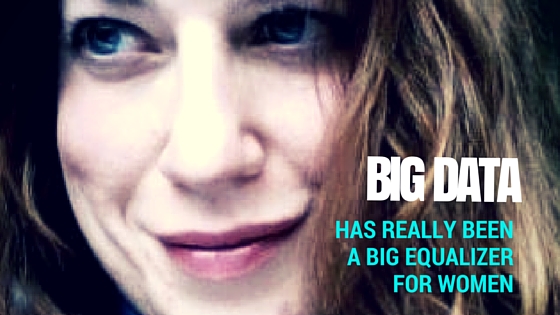
I’ve been so lucky in my career to have many strong women leaders as mentors and role models. In my years in FinTech, Big Data has really been a big equalizer, in the sense that many of the data scientists (aka statisticians) and strategy leads I’ve worked with have been women. I am keeping an eye on what Visa’s Chief Risk Officer, Ellen Richey, is up to these days. She’s not a technologist per se, but she’s done a great job keeping everyone focused on the key requirements for securing the payment system and maintaining trust through the network. Carey Kolaja is pretty great, can’t wait to see what she does next. Carol Coye Benson and Erin McCune of Glenbrook, and Avivah Litan of Gartner are all analysts that have been hugely influential in the adoption of technology in the financial space. Also, there are so many great entrepreneurs in this space, and plenty of room for growth in emerging markets - I love what Upasana Taku is doing with MobiKwik, for example.

© 2015 | FemTech Leaders
Start the conversation