Cristina Cordova
Business Development at Stripe
San Francisco, California
@cjc | LinkedIn Profile
Stripe is a technology platform that developers use to build internet businesses. Our software tools let companies accept payments, expand globally, create new business models, and conduct commerce across more channels. We work with companies like Lyft, Twitter, Pinterest, Instacart, and Shopify, to name a few. The company’s mission, simply put, is to build technologies that will accelerate globalization, economies, and the internet itself.
I lead the business development team, which focuses on strategic, platform and distribution partnerships. I spend a lot of time, and am energized by, creating new things: new partnerships, products and ecosystems that challenge current thinking to push commerce to the next level. (A good example of this was last year, when Stripe was a launch partner for Apple’s introduction of Apple Pay.)
You were an active blogger on your experiences in FinTech and at Stripe; however, your updates have tapered off lately. Is this due in part to the success of Stripe or other factors?
Writing continues to be something that I enjoy and do (mostly on Medium these days: https://medium.com/@cjc), but the growing demands of Stripe (a wonderful problem to have!) remains my top priority. It’s easy to write in shorter form on Twitter, so I do my best to share there.
Do you enjoy the process of blogging?
Yes, it’s a chance to think about different challenges and industries, digest and share learnings. The blogging process is a chance to reflect but also share — what works, what maybe hasn’t — and I enjoy creating these type of open dialogues.
You joined Stripe while it was still a relatively small team (around 30 employees at the time). What attracted you to the company?
Stripe certainly checked all of my boxes (the right people, product, growth potential and role), but more importantly, everyone was quietly, singularly focused on building the best product and company possible. That type of environment doesn’t necessarily suit everyone — it’s often stressful — but it tends to attract people who are ambitious and want to achieve a long-term vision. It was impossible to hear about where Stripe was going and not want to be part of it!
Has the success of Stripe impacted its culture?
As you grow from 10 to 100 to 300 people, your culture will change because each person who joins is an active contributor to that culture. An evolution of sorts is expected as a result. It’s important we articulate our core values, the very things that truly define Stripe’s culture, and make sure those remain consistent across the organization even as we grow. Things like transparency (emails are readable by everyone, for example), flat structure and willingness to do what’s necessary to succeed remain consistent. We’re all committed to these core tenets.
You are an active contributor to sites such as Quora. Why is this? Do you believe this is a brand extension for Stripe?
Collaboration is a huge part of my role — much of our best work has come from discussions with partners and customers. Who are we if we’re not constantly learning and growing? I find tools like Quora helpful to learn from others and a good place to share my views on topics as well.
What are your own personal favorite social media channels?
Twitter, Instagram (I’m a big fan of food pics), Medium, Quora - I see social media channels as a great way to share and interact with a large community.
You wrote an outstanding piece this past April on LinkedIn (https://www.linkedin.com/pulse/sourcing-women-engineering-cristina-cordova) in which you spoke in depth about the gender diversity issue with respect to women engineers. You also created an index of over 300 female engineers. What was your personal motivation for writing the piece and publishing the listing?
Diversity in the workplace, specifically creating an inclusive community, is very important to me. But I’ve grown tired of excuses, in this case in particular, the “pipeline” problem. The index was born of that idea — here is a whole list of women you can hire, start here. But that’s only one solution.
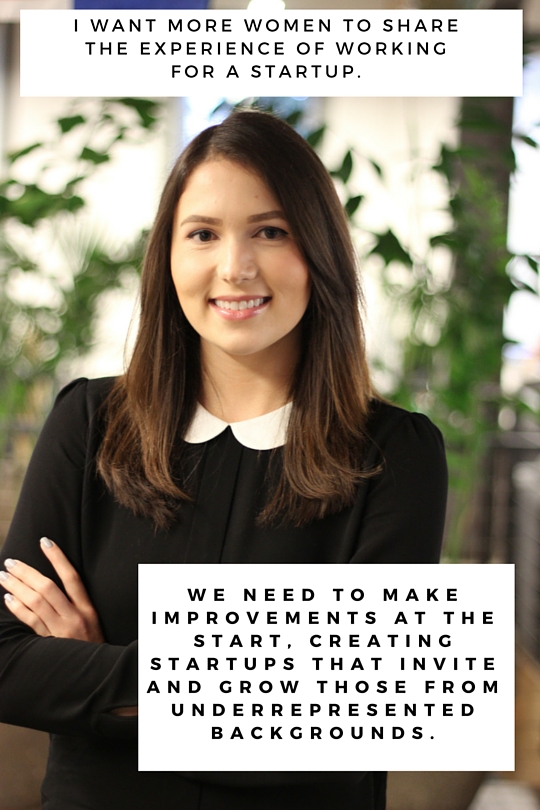
I’ve had the ability to do great work at Stripe, and yes, stood out as a woman, thanks in part to the visibility and opportunity that comes from roles at early stage companies. I want more women to share the experience of working for a startup. We see a ripple effect as companies grow and move up the chain — we want more female CEOs, we need to make improvements at the start, creating startups that invite and grow those from underrepresented backgrounds.
Who do you consider to be strong women leaders in the banking / FinTech space?
Sheryl Sandberg - she is clearly a great leader and a powerful woman in technology. Most people know her as the woman who led operations of a $100 Billion dollar company to its IPO. But particularly compelling is her path there: she led the Treasury’s work on forgiving debt in the developing world during the Asian financial crisis, was responsible for online sales of Google’s advertising & publishing products, and also for sales operations of Google’s consumer products. She brings to her role such a holistic and authentic understanding of business, which I admire.
What do you see as the 3 leading future trends for FinTech? How do you believe Stripe is positioned to address these?
Federated Commerce: we’re in the very early stages, but consumers will be able to discover products in a mobile app and buy them without ever leaving the app they’re in. For consumers, the point of discovery is shifting more than ever towards the apps and social media feeds on your phones. Stripe enables a consumer to buy a product in any app with a frictionless custom user experience, which is essential for driving conversion. This is one way the checkout experience will become even simpler, and I expect, have major impact on the success of mobile commerce.
Unified payments platforms: Major retailers are evaluating whole new revenue models, like subscriptions, but with that comes increasingly fractured channels, more obstacles, and more opportunities, for businesses. Unified solutions — like Stripe! — will continue to be a critical component for future-proofing businesses, helping merchants navigate murky waters while also meeting customer demands, whatever they may be.
A truly global economy: We envision a world in which everyone can buy goods and services from each other, or build the business of their dreams, regardless of location and the way they’re paying. That’s simply not a reality today. Slowly but surely, we’re getting there, breaking down walls between regions and bringing everyone into the ecosystem. Ultimately, we’ll see the internet as a great enabler for all global business…we’re just getting started.

© 2015 | FemTech Leaders
Start the conversation