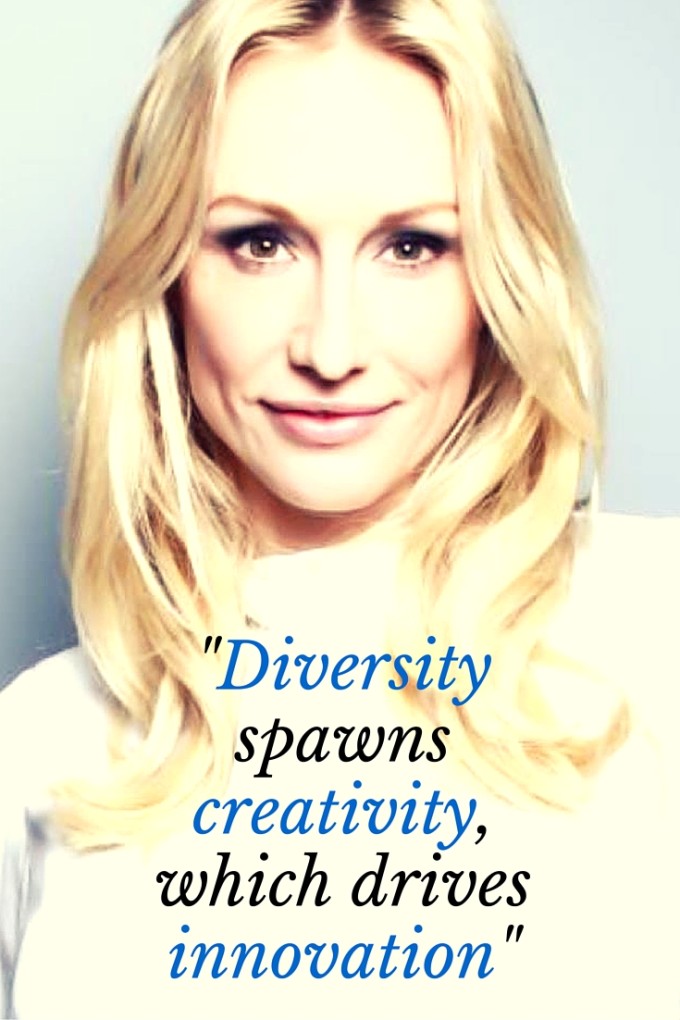
Tuva Palm
Managing Director, Consumer & Issuing at Klarna
Stockholm, Sweden
@tuvapalm | LinkedIn Profile
Klarna has successfully navigated the path from FinTech start-up to a global company in short matter of time. What do you believe has contributed the most to this success?
People are our greatest asset. We have so many team members who are bright minded, have the ability to see opportunities, and are brave enough to be willing to take on a challenge. The initial vision was to simplify e-commerce by introducing the possibility to buy first and pay once you have received the goods. Now we provide full service payment solutions for e-commerce, as well as for marketplaces, transportation and travel, and digital goods.
How would you describe the culture at Klarna? Is this a significant factor to its success?
I have never, during my 20-year career, experienced something similar or met so many committed people. Klarna is growing rapidly, both as an employer and as a global business. We get more and more consumers, and the customer satisfaction index show record breaking numbers each month. So, you could say that we are running. Fast. But we have people cheering us on as we run. We are innovating and move as fast as a start-up, but have the financing and business mind of a larger enterprise.
How would you describe the FinTech environment in the Stockholm as compared to London, NYC, or Berlin for example?
Stockholm has become the start-up capital of Europe and one of the top start-up hubs in the world, competing with Silicon Valley. We see more and more successful start-ups from Stockholm taking over the world in various markets such as King.com with Candy Crush Saga and Spotify in the music industry. Stockholm is a pretty small city, we compete with and share talents between these larger players. It provides a special dynamic, and we do see synergy effects.
You have an extensive engineering background and have worked for several global engineering companies to include Oracle. What do you believe has influenced the low number of female engineers traditionally?
Old traditions and prejudices. It starts at toddler age in how we unconsciously approach kids. My father told me early on about how the world works, about electricity, physics and chemistry. My mother, who was an entrepreneur, encouraged me to start my own business at the age of 6 (she was also the first customer). Later in life, I met females who were under the mis-assumption that math is for boys and that computers are boring. That is so sad! Engineering is a creative profession. Diversity creates creativity, which drives innovation. We will all gain from a more diverse engineering community. In addition, many of the products developed have females as their main user group. Our general customer is a female in her early 40’s.
Is gender diversity a major issue in Sweden from a FinTech standpoint in your opinion?
Yes, gender diversity is an issue in all tech sectors in Sweden. As in the rest of the world we have fewer females than men applying to technical universities and choosing engineering as a profession. However, we have very generous parental benefits in Sweden, encouraging both the mother and father to split the parental leave which has an impact in attracting and keeping talented women.
Several countries in the Nordics have introduced quotas with respect to the number of women serving on company boards. Do you agree with this approach?
This is a very difficult question; it is utterly important to get diverse boards, but I don’t personally believe in quotas. It would not encourage me as a woman to make great things, and I don’t believe it would encourage others to listen to me. Instead I believe in putting the spotlight on talented women. There are many successful, hardworking, smart women out there. Let them inspire younger women to choose Fintech.
Who(m) do you believe has had the most influence with respect to your own career?
My mother-in-law. She was a pioneer in her time. She got bored with the housewife life when her kids were still young, went to high school for adults, then university and got a PhD in medicine, and in ultra-speed kick-started a career in biotech where she managed teams to design and deliver some of the world’s most used medicines today. She taught me two important things: first of all, you can be a great manager and leader, and still be the woman you are. You don’t need to be someone else, just learn your way of managing and leading. And secondly, you must be aware of how old beliefs and prejudices can be a disadvantage sometimes. Don’t be naive, but don’t become a victim either. Don’t use your energy on anger that won’t lead to anything, focus on doing the right things.
Who do you consider to be strong women leaders in the banking / FinTech space?
We have several - but still too few! Eva Cederbalk comes first to mind. She is very powerful, strong and extremely competent, both in banking, fintech and e-commerce. We are blessed to have her as chairman of our board at Klarna. She has an impressive CV with a history as the CEO of SBAB, Eurocard & Netgiro International. Then we have Annika Falkenberg, CEO of SEB, who also is very powerful and who has proven herself by successfully leading one of the largest banks in Sweden during some shaky years. We also have Mia Jurke, CEO of East Capital Explorer, who definitely is up and rising.
What do you see as the 3 leading future trends for FinTech? How do you believe Klarna is positioned to address each?
E-commerce is becoming more and more borderless. Still, consumers want to feel like a regular – everywhere they shop. You want to walk into any store offline or online, anywhere in the world, and say “I’ll have the usual, thank you.” You want to be recognized and be able to pay automatically.
As e-commerce continues to grow, and will become more global, people consequently will have a lot more to choose from, but in the digital era they are less willingly to actually make choices. We have to personalize the buying experience so that an individual can buy the way they prefer, in their preferred currency, at their preferred pace, and seamlessly. We also have to support merchants to help the consumer find what they need.
With more and more goods and services available online we will see larger marketplaces create infrastructure to connect buyers with sellers. The marketplace acts as a layer between buyer and seller to provide safety and simplicity for both parties. E-commerce will increasingly play a similar role in the sharing economy.
Klarna is well positioned to address these trends. Our aim is to become the world’s favorite way to buy.

© 2015 | FemTech Leaders
Start the conversation