Paulina Sygulska
Director and co-founder at GrantTree
London, United Kingdom
@Payah | LinkedIn Profile
How did come up for the original idea for GrantTree?
Seven years ago I was working on a startup incubation project and learnt a lot problems young companies were facing, most of them on the finance side. And the answer was usually this: as soon as we raise angel/VC we will be fine (which is obviously a juicy piece of startup bullshit, it’s with an equity raise that real work - and real problems - typically start). I also saw how many tech people knew absolutely nothing about equity free funding, government grants in particular. Those who knew typically weren’t bothered to look into it properly. I figured those two facts amounted to an interesting business opportunity.
What makes GrantTree unique in the marketplace, especially considering your focus on UK government funding?
At the moment heavy use of tech to manage and deliver grants and a unique open culture and self management style we foster as a company. We are about to launch a fintech platform which will deliver loans against government funding that’s truly unique, at least on the UK market. Watch this space 
What has been the key one or two lesson learned from your experience of growing a company from running out of your spare bedroom to a corporate office with over 25 team members and 350 clients?
Two immediately standout:
- Initial commercial success based on following your market - and your competition - very closely, will allow you to do exciting things without worrying about where the money will come from.
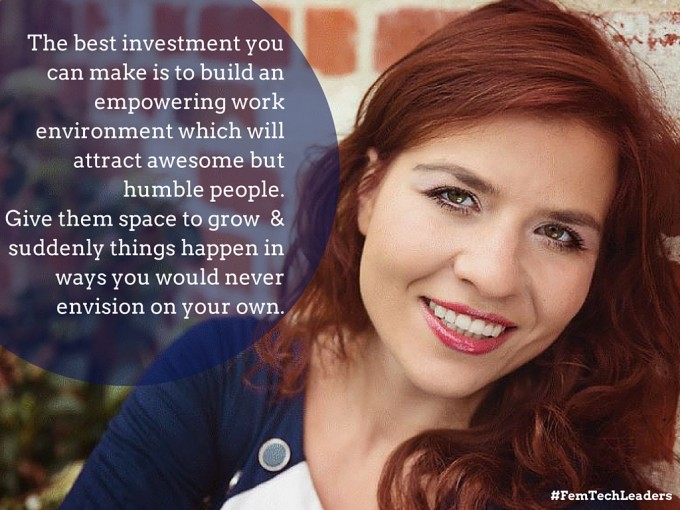
- The best investment you can make is to build an empowering work environment which will attract awesome but humble people. Give them space to grow and suddenly things happen in ways you would never envision on your own.
You mentioned GrantTree is a “very human based service”. What did you mean by this?
Human interaction component is still very important. I saw a lot of people within the consultancy automate too much too quickly, compromise on the quality of service and lose the interest of their market.
I recently read in interview of yours from August 2015 in ‘Virgin Distruptors’ where you noted GrantTree had adopted the ‘holacratic model’ as a management structure. What has the experience been like?
Challenging like hell and beautifully enlightening at the same time. I recently met with one of the top execs at MasterCard who is following us closely and he asked, “So how is that social experiment of yours going?”. “Interesting as ever” I said “my team are now setting their own salaries, learning Non Violent Communication to give each other difficult feedback and we’re thinking of employing a coach that would help team members figure out what are their options on the job market and how to shape their careers within or outside of GrantTree should they want to.”
Your Tedx talk is one for the ages in which you compare burlesque to being a startup founder. Can you expand on this a little?
I can - with a devilish pleasure of a socially unacceptable stripper. Firstly, burlesque (and a lot other forms of art explored deeply enough) teach you how to balance on the boundary of the socially acknowledged and respectable. You have to be willing to lose respect and piss off quite a few people if you want to disrupt a market as a startup founder. Secondly, you will need to learn to stick out, potentially (or actually) humiliate yourself and love it. Burlesque and standup comedy are good crash courses in that.
You are originally from Krakow but London is your home. How do you believe growing up in Poland and living in the UK as an expat effected your approach to business?
I suppose you could say I had it hard at the beginning as a girl with an Eastern European accent trying to, OMG, get into tech. I kept on going to geeky meet ups and drinking pints with bearded guys though and it worked eventually. It’s all about perseverance
On a more serious note, getting away from home and detaching myself from a certain idea of what your life and career are supposed look like (which we inevitably acquire whilst growing up) worked wonders. I’d recommend it to anyone.
You are one of the founders of the “Unconventional Convention”. What exactly is this focus of these events in London?
When I turned 30 I threw a big party to which I invited two radically different groups of friends - the forward thinking, ambitious entrepreneurs and social outcasts, cabaret people and general artists of life. It went better than I hoped. We had TED talks and strippers and everyone had a ball while getting something to take away from the evening too. That’s when it hit me: we are all intellectuals, rebels, beasts, artists, perverts and little children at once. It’s just a matter of which side we allow to come into play at what time. Why not create a space where we can celebrate all the alter egos, and indulge them all too?
Who(m) do you believe has had the most influence with respect to your own career?
My first business partner Paul. We parted ways when it was the right thing to do but not before he unleashed the fearless part of me. My other half and second business partner Daniel (see his blog for founders on swombat.com) taught me focus on values, self awareness and, above all, the meaning of ultimate trust in people. Failures taught me everything else I needed to know about business until now. No doubt they’ll teach me what I need to know going forward too.
Who do you consider to be strong women leaders in the FinTech space?
Ada Lovelace, Eileen Burbidge, Fancy Chance (my favourite stripper)
What do you see as the 3 leading future trends for FinTech?
- Hiding back end complexity and focusing on the user journey (see Go Cardless or Transferwise).
- Mobile pay. Still a lot to do in this space and Apple hasn’t had the last word. Selfie pay and biometrics either.
- Mass slaughter of high street banks unless they adapt fast and acquire enough leading thought startups. Obvious, right?

Join the conversation
© 2015 | FemTech Leaders
Adrian - 3 months ago
Inspiring words from a truly inspiring leader. Conventionally unconventional and so right about the future of retail banking. The customer will win through