Mandy Simpson
Chief Operating Officer at NZX Limited
Wellington, New Zealand
@mandysimpson | LinkedIn Profile
You are originally from the UK. What prompted the move to New Zealand? And how hard was it to be away from family?
I made the move initially for lifestyle reasons. I was spending at least 3 hours a day commuting in London and just felt like I was wasting so much time. I spent some holiday time in New Zealand, fell in love with Wellington, and made the move a couple of years later. Now I get to do a 10 minute walk to work each day in one of the loveliest cities in the world. My parents actually made it really easy for me to move to New Zealand, they were incredibly supportive, but it’s still an awful long way. There were a couple of occasions when I really needed to be with them and couldn’t be. But they came to visit a few times and understood what I saw in the place. Then, when they retired, they also moved out here, and now live an hour outside of Wellington.
You studied law at Cambridge. Are you able to tap into your legal background in your current roles?
I really enjoyed studying law. The English legal system is this crazy mix of legislation and case law. There are few clear answers, and every question or case study is like a puzzle, trying to work out what might apply. I also got to study some really interesting areas such as intellectual property. I knew fairly early on that I didn’t want to practice law but it has been very useful in my career to have those skills. Anyone working in financial services is subject to significant regulation, so it helps with understanding that, as well as reviewing contracts, or even just being able to structure a logical argument.
What exactly does a Forensic Accountant do? This was your first role out of university, correct?
Forensic accounting is just about the perfect area for someone with a law degree and a strong interest in finance. Forensic accountants use their ability to understand the detail of financial records to investigate fraud or to provide financial expert support for litigation – for example working out how much someone has lost in a contract dispute. I really enjoyed it, particularly the fraud investigation element and from there I went on to a role with the London Stock Exchange investigating market abuse and insider trading, so it was my path into financial services.
What is the FinTech scene like in New Zealand and how are banks in the market responding to the startup community there?
Some areas of FinTech are in great shape in New Zealand. We broadly have a strong but transparent regulatory environment, with the Financial Markets Authority in particular being open to innovative ideas. Equity crowdfunding has done particularly well and peer-to-peer lending is looking strong also. There are a relatively small number of banks in the New Zealand market and they are predominantly Australian owned so they seem to take the lead from the Australian environment.
How would you describe the difference between a CFO and a COO role, two positions you’ve held?
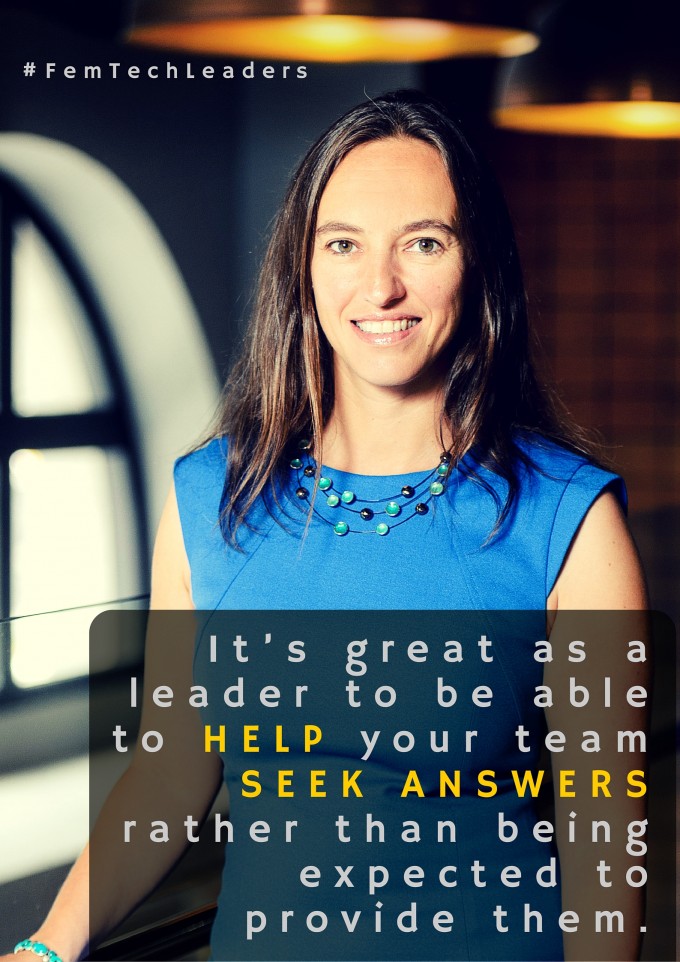
Both roles are really interesting for different reasons. As CFO you sit at the heart of a company, alongside and supporting the CEO. You get to see and be involved with all aspects of strategy and performance. For CFOs who are operating at that level it’s a really interesting role that goes well beyond the numbers. The biggest change for me moving into a COO role was the experience of no longer needing to be the subject matter expert and being able to focus on leading a high performing management team, each with their own areas of expertise. It’s great to be able to help them seek answers rather than being expected to provide them and certainly something I’ve really enjoyed.
“People don’t carry cash here.” You used this phrase to describe the consumers in New Zealand. What is the attitude and behavior of the typical consumer with respect to FI technology adoption in your adopted country?
Modern card technology is widely adopted among merchants in New Zealand, and consumers are quick to adopt new technologies as they arrive. When I landed in New Zealand from the UK 10 years ago I was astonished at how little cash I needed. Nearly every shop and market stall, no matter how tiny offers card payment. Chip and pin was just being rolled out when I arrived, and is now compulsory. More than 75% of consumers are now using tap-and-go technology, although it’s certainly not available everywhere yet. I’ve never needed a cheque book in New Zealand, and in 2015 the average person wrote only eight cheques.
You created and currently manage a graduate programme. What motivated you to do this?
When I arrived at NZX we were struggling to keep young people in analyst roles for more than around 18 months. There were lots of reasons for that, but the main one appeared to be lack of variety in the experiences they were getting. That’s pretty crazy at NZX as we have so much going on - it’s one of the great benefits of working for such a diverse organisation. So I set about creating a programme where they could rotate through three areas of the business spending a year in each, and then added ongoing education, public speaking practice (via Toastmasters), mentoring, sponsorship and industry visits. We have 10 graduates now, with a 50:50 gender split and good ethnic diversity. The first group is in the final year of the programme. It’s been even more successful than I hoped and its great to see them coming through and making a difference for NZX.
How do you decompress from the stress of your roles?
I run a lot, when I’m not injured anyway! We’re pretty lucky for both running weather and scenery here in Wellington so I try to make the most of it. For the past year I’ve tried to meditate every day, I find that a good way to start my day. Finally, when I can, I love to cook - I use a New Zealand startup company called My Food Bag so that I don’t have to stress about what to cook or about food shopping, and can focus on the actual cooking part – and the eating of course.
Who(m) do you believe has had the most influence with respect to your own career?
Role models early in your career can have a huge impact, well beyond the time you spend with them. In the late 90s at Deloitte I worked for Emma Codd, who at the time was a Director in the Forensic practice, leading the growing Business Intelligence area. She was made Partner in 2002 and has gone on to be Managing Partner for Talent. At the time there were very few women in our area of the business, Emma hadn’t come through the more normal accounting route, and had a very different style to the rest of our senior team. She demonstrated for me that hard work and talent could get you anywhere, but also that you don’t have to conform to everyone’s expectations.
Who do you consider to be strong women leaders in the FinTech space?
Locally we have women in the top digital roles at two New Zealand banks. Liz Maguire is Head of Digital and Transformation at ANZ and Melissa Steward is Chief Digital Officer at Westpac. We also have women CEOs at a number of local fintech startups – including Anna Guenther at crowdfunding platform Pledgeme and Kendall Flutey at financial education software provider Banqer. All are doing great work changing the way financial services are provided, while also being role models for others who want to do the same.
What do you see as the 3 leading future trends for FinTech?
Digital identity – many of the costs and frustrations in financial services are driven by trying to prove identity with paper in a digital world. Proving identity online while maintaining privacy has the potential to unravel a great deal of that mess.
Payments technology – whether it’s using blockchain technology, or peer to peer transfers, it will get much easier to make low cost, immediate payments. The areas where fees have been historically high will see the most change.
Customer experience – just because a process is complex, it doesn’t mean the customer should experience it that way. We’ll see user-focused design, with mobile and smart technology being used to make financial services that are personalised, intuitive and easy to use. I’m still hoping for beautiful too.

© 2015 | FemTech Leaders
Start the conversation