Roberta Profeta
Innovation Manager London Hub - European Region, for the Chief Innovation Officer Area of Governance at Intesa Sanpaolo
@robbieprofeta | LinkedIn Profile
London, United Kingdom
What exactly is your role at Intesa Sanpaolo?
Intesa Sanpaolo is Italy’s largest bank and has a global footprint, with a brick and mortar presence of over 4,100 branches in the country and
circa 1,200 abroad. Innovation is of strategic relevance for our Group, hence the positioning of the department at Governance level and the appointment of a Group Chief Innovation Officer, who has a team of 80+ strong, primarily based in Turin, Italy. I am with the Chief Innovation Officer Area of Governance; I live in London and work from the London Hub: my role is that of Innovation Lead for Europe and I oversee APAC, as well. In a nutshell, this includes engaging very closely with the various stakeholders in the community, so as to intercept compelling new opportunities, be involved with the latest technologies, understand the potential directions and paths upcoming technologies might lead us to tread and how the company I work for can embrace such novelties and have a positive impact for the clients and the industries through them.
You are truly a citizen of the world. Can you speak to your experiences growing up with such a diverse background and how this shaped who you are today?
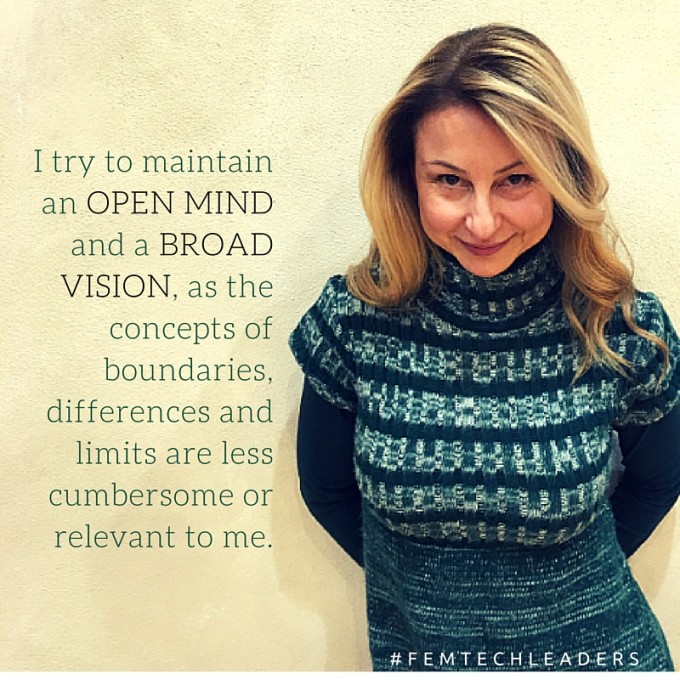
I have been steeped in very different cultures and traditions all blended in together ever since I was born, with a wealth of nationalities, beliefs, customs, food from the West to the Far East. I was brought up without clear and defined boundaries between cultures; they quite literally were blended. One of the examples I sometimes mention is our traditional family Christmas food, i.e. Chicken Curry, normally prepared by my mum – who was Italian. This colourful upbringing has allowed me to be very much at ease in transitioning between extremely different scenarios and to adapt very quickly to the environment, included a fast-pace changing one. On a different level, albeit related to the former, I reckon I maintain an open mind and a broad vision, as the concepts of boundaries, differences and limits are less cumbersome or relevant to me.
How many languages do you speak and how many languages have you forgotten?
I speak three languages fluently, a fourth one well enough, whereas two I have completely forgotten (Chinese, Malay), as they were intimately related to my childhood.
What led you to a career in Finance?
Although as a youth my passions were mainly literature and drama, I also had a penchant for Economics, which I likewise studied. Economics was a household topic, as I can still recall how my father would comment on current situations with that insight – with regards to this, the late 70’s and mid 80’s were interesting times, to say the least. As I moved on to University, Economics & Banking became the area I first chose to specialise in; driven by my upbringing and my thirst of understanding more about the history and philosophy of the cultures I have experienced, I then completed my studies as a political scientist. This mixture has come to much avail in my growth as a professional, as almost from the inception all of my roles entailed doing business in an international environment. Every Country has its own approach to business (indeed, multicultural Countries have more than one), business people act differently according to their own traditions and have very diverse patterns of behaviour – whenever a role came up which would have benefited from a deeper understanding of these peculiarities, I seem to have quite naturally evolved towards them.
You’ve been involved with innovation well before it became ‘cool’. How have you seen the approach to innovation evolve from a banking perspective?
I vividly remember how difficult it was to address the concept of ‘innovation’, both in banking and other industries, as many hadn’t come across the term as it is currently used. It all seemed so far removed from ‘real business’ and ‘what is necessary’ back then, that puzzlement, if not suspicion, was perhaps the most frequent reaction to the initial approaches – as my fellow ‘innovation advocates’ and myself have often confided to one another. Unyielding belief in the intimate correlation innovation has with competitiveness in global markets and evolution (of businesses, of technology, of processes, etc.) has been the driving force underlying the wave of change that has since occurred. Innovation has become more widespread, to an extent that now it has become a matter of relevance not only for C-Suite, but also for Ministers of Finance and Governmental Monetary Authorities around the world. Innovation has transitioned from being (perceived as) a buzz-word to being understood as central to business: suffice it to think of, to cite but a few examples, how smart contracts on blockchain technology could potentially impact import-export activities (considering corresponding banks, Bill of Ladings, verification of goods, payments etc.); how real-time risk assessment via big-data exploitation with regards to either Countries/Regions or industries could be mirrored in hedging risks or insuring against them or extending credit-lines, etc; how IoT can further transform the financial sector industry, from insurance to payments and so on. These are but a mere handful of examples and not necessarily the most disruptive.
You moved to London a few years back. How has the City changed with respect to FinTech during this time?
London is an extremely reactive city and so is its financial community. There has been a very important and constant growth both in the numbers of startups active in this department and in the activities and initiatives banks and financial institutions engage in. The commitment of the UK Government of £10 million to the research in blockchain technologies distributed ledger highlights this.
Do you consider London to be the FinTech capital of the world and if so, why?
London has a very unique quality to it, as it is the political, financial and startup focal point for the UK. Banking has likewise been a traditional industry in the City, so the cultural roots are very strong. The coexistence of these characteristics is quite unique and if we add to that the size of the city itself (population-wise), the reason London is the epicentre of finance becomes quite apparent. If we consider this in combination with the positive attitude the Government has towards FinTech, London undeniably is the breeding ground. This does not imply that other cities aren’t contributing to FinTech, nor that there aren’t other FinTech hubs in the world – on the contrary, FinTech is a growing sector and we constantly see communities rising and consolidating globally. London arguably has historically been the primary market and still is.
You are an active mentor for startups. How do you approach establishing a relationship with FinTech founders coming from a bank?
Founders coming from banking are very stimulating to work with. They have an inside knowledge on how it works, the strengths and fallacies. Far from being a hindrance, their expertise is a compelling quality and makes for lively discussions and business-model canvassing. Whether they come from corporate banking, retail banking, IT, investment, they all bring with them a deep knowledge of what happens behind scenes, how and why – interaction becomes more technical and ‘raw’. FinTech is unchartered territory for everyone, hence the deeper the questions, the more we can all comprehend and hence achieve. The aim is to facilitate the evolution of the industry, pulling in know-how and technologies and pooling the efforts.
How do you find time for yourself to unwind? What activities do you pursue?
As for the next person, time is quite a scarce good. During my ‘off-time’ I tend to privilege activities unrelated to banking and/or innovation. I love reading and my ‘chill-time’ list mainly revolves around dystopian literature and history. I am quite keen on art exhibitions, as well. Being quite an outdoorsy person, whenever possible I engage in activities such as hiking with friends or running. Yoga has been a staple with me for years.
Who(m) do you believe has had the most influence with respect to your own career?
Over the years I have had the privilege of working with some excellent individuals, old-school managers with a steep knowledge of the technicalities underlying banking transactions, alongside a robust strategic understanding of business. They had rough edges and were extremely demanding, but strived to pass on any knowledge and know-how they possessed – they took their senior roles very seriously, one of the aspects being bringing up the next generation. Two former bosses of mine in particular, both men, have taught me the ropes and driven me to move on, encouraging me in an – in those days – intrinsically male-dominated industry.
Who do you consider to be strong women leaders in the FinTech space?
I am lucky enough to have the honour and joy of meeting with and working alongside of some exquisite professionals in FinTech, with impressive skills and a deep understanding of the space. Luckier still, I can call them friends, too. As names must be made, those of Claire Calmejane, Duena Blomstrom, Leda Glyptis, Andra Sonea, and Liz Lumley immediately roll off my tongue: exceptional pros, great minds, full of energy and drive to accomplish.
What do you see as the 3 leading future trends for FinTech?
There are several strong topics, to be honest. Picking three, I expect to see a stronger, pervasive and more sophisticated use of AI and deep-learning in Financial Services, as we’re still in very early days. Big Data in all of its true potential should sooner or later see the light and, from an in-house perspective, I’m keen on appreciating how it can positively impact high-level risk-management and hedging. Blockchain (and the plethora of ways to exploit the technology) is today’s star, but there is still a lot to do to make all of it real; we have very interesting projects on what in theory can be done it, we yet have to make it possible.

© 2015 | FemTech Leaders
Start the conversation