Seema Patel
Senior Director, Visa Direct at Visa
San Francisco, California
LinkedIn Profile
Visa Direct is an innovative service that financial institutions can offer to enable secure money transfers to millions of participating Visa cards globally.
My team is chartered with commercializing U.S. push payments to Visa cards via the secure Original Credit Transaction (OCT). This entails engaging the broader ecosystem of stakeholders – service providers, card issuing financial institutions, acquirers, 3rd party processors, etc. on a variety of levels. My responsibilities include launching P2P scale partner programs like Square Cash and Facebook Messenger Payments on our Visa Direct platform.
You are very active in the money movement (P2P) space at Visa. Do you believe P2P will move into the mainstream consumer market outside of Millennials?
Millennials are not only much more willing to consider and try non-traditional payment methods, but many actually prefer these channels. In addition, shared expenses such as housing (rent/utilities) and social outings (restaurants/bars/activities) are a large portion of Millennial spend. As such, it’s not surprising that early entrants like Venmo saw greatest adoption among this demographic cohort. However, newer service providers and programs are not necessarily targeting Millennials exclusively and with this new volume, we are already seeing signs of P2P activity moving more mainstream.
You’ve been responsible for integration projects with both Square and Facebook while at Visa. Do you believe these type of inter-company partnerships are the business model for payments going forward?
Absolutely. There is no question that “payments” has become a much more dynamic industry over the last 5 years. From the initial flurry of “this is an old industry…clearly ripe for disruption” has emerged a much more collaborative approach among traditional and new players. There is an entire graveyard of payments-related startups – largely disintermediation plays — that have learned the hard way that payments is, quite simply, a very challenging and complex business. That being said, there is still plenty of opportunity for innovation and disruption. As all parties get better about identifying opportunities for competition vs. collaboration, the industry is evolving to a much more productive and progressive space, and this is fueled in large part by partnerships.
You are very active outside of work with programs such as The Bread Project and La Cocina. What drew you to these initiatives? Do you believe FinTech solutions can address these types of social programs?
I come from a culture that is deeply rooted in community, where community is regarded as an extension of family. My parents instilled in my sisters and me the notion of being a part of something bigger and broader than our own individual lives through their own choices throughout our upbringing – being an active part of a cultural/social group, engaging in local community service projects, participating in disaster relief work around the world through Rotary International, etc. (In fact, my mother, a vegetarian with understandably no interest in carving a turkey, would often take our family to serve meals at food shelters in lieu of traditional Thanksgiving dinner at home.)
While hands-on service and financial contributions are great “point-in-time” efforts, helping shape things at the system or program level offers a chance to make a bigger impact. Once I learned of organizations like The Bread Project and La Cocina, both of which aim to strengthen community by empowering individuals to become self-sufficient, contributing members of society, it was a no brainer to get involved. (It helps that both are food-related and I love all things food!)
Square, in particular, is one great example of a FinTech solution that has been instrumental in the success of La Cocina program graduates, from a technical, functional, and business/financial perspective. As P2P and business-side money movement use cases continue to evolve, as well as investments in underbanked/unbanked financial inclusion initiatives, I have no doubt we will continue to see more FinTech solutions influencing and supporting social enterprise programs.
How would you describe the FinTech start-up scene in San Francisco as compared to NYC?
NYC tends to lean more on “Fin” while San Francisco weighs in heavier on the “Tech” side of FinTech.
Have you seen a change in the culture at the larger financial services companies due to the FinTech movement?
The FinTech influence on company culture amongst larger, more traditional financial services companies is noticeable on several fronts. As these larger companies interact more with the smaller, highly nimble players, there is more of an impetus for speed, be it software/product releases or business decisions. There is also an increasing appetite for taking risks and evolving solutions through rapid iteration, versus waiting until everything is 100% perfect before going to market. Last but not least, dress code expectations have certainly morphed. While hoodies aren’t quite the norm (yet?), jeans and more casual attire are becoming increasingly commonplace across many organizations.
Several countries in the Nordics have introduced quota’s with respect to the number of women serving on company boards. Do you agree with this approach?
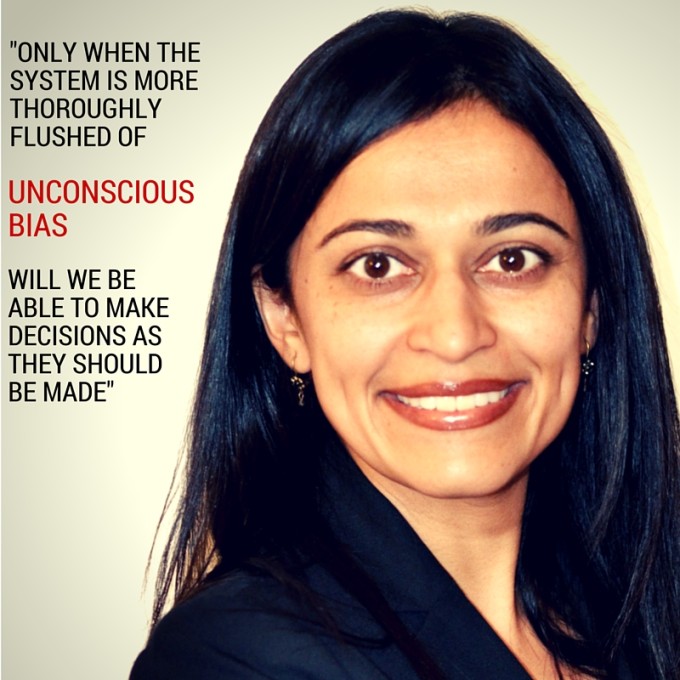
While well-intentioned, I believe a quota is far too much of a point solution for a problem that is essentially entrenched in our individual minds, collective behaviors, and society at large. Gender gap and diversity issues largely stem from things like unconscious bias and a lack of envisioning females in more senior level roles due to little historical precedent. These issues need to be unwoven at a much deeper level, perhaps through ongoing education; instituting a quota is akin to a cosmetic or surface-level fix. Only when the system is more thoroughly flushed of unconscious bias will we be able to make such decisions as they should be made – ie. based on merit, role fit, etc. as opposed to gender.

© 2015 | FemTech Leaders
Start the conversation