Sara Holoubek
You grew up in Wisconsin yet ended up studying abroad in Paris for your MBA. What gave you the itch to travel and study overseas? How did this experience shape your approach to business?
I inherited the travel bug from my parents, who always argued that we would learn more through travels than sitting in a desk. In addition to my roots in rural Wisconsin, my family considerable time in rural Yucatan before Tulum was “a thing.” At the time, the closest land line was 20 minutes away and you were just as likely to hear someone speaking Maya as you were Spanish. Switching between these drastically different cultures taught me many skills I employed while living in other parts of the world, and in business today. I learned to be a quick read of your environment, taking note of what is or is not appropriate, and then modeling that behavior to ensure a particular outcome. Linguists call this “code-switching,” and yet it extends beyond language itself. Every company has a particular culture, and a particular set of conditions for success. Good consultants know that they can best effect change by knowing and respecting the conditions for success.
In describing your backstory you mentioned your experience in working from Dot.com to Dot.bomb. ? How did this experience shape your approach to business today?
My world view is very much informed by how quickly things can change. One day you are at the wildest Internet party (that’s what we called launch parties back then), and the next everyone around you has received a pink slip and equity is worth nothing.
“Patience and perseverance are key to a company’s success.” What did you mean by this?
Your product alone will not change the world. Your sustainable business will. Too many startups, and their investors, are focused on the product, and not the company. Positive urgency can be a good thing, but so can patience and perseverance.
What do you enjoy most about being a company founder?
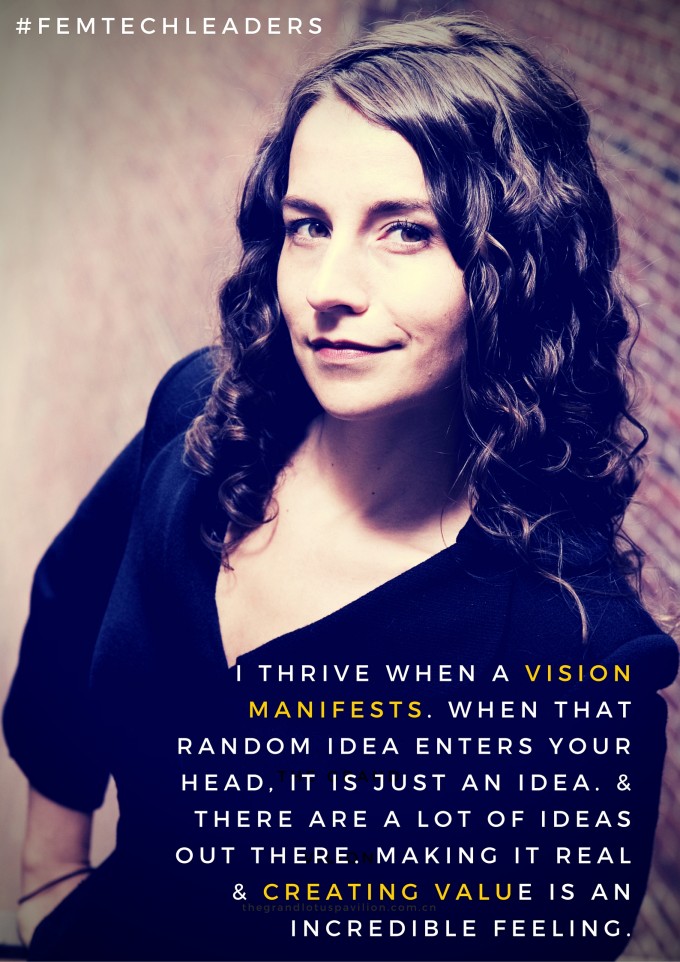
I thrive when a vision manifests. When that random idea enters your head, it is just an idea. And there are a lot of ideas out there. Making it real and creating value is an incredible feeling.
Your presentation series “The Human Company” is one of my personal favorites. How did you come about creating this?
In late 2014/early 2015, we noticed that numerous large companies were announcing employee-favorable policies and tying this new imperative back to business ROI. And despite their investment in “culture,” it occurred to us there was no playbook for the growth company who seeks to build a business that is both human and sustainable.
“Being female friendly doesn’t necessarily mean being family friendly.” You stated you learned this after having your first child. In what way?
There is an erroneous assumption that female-friendly companies support a culture that is also family-friendly. A company can be very gender diverse, and at the same time not support the needs of parents, such as attending to a sick child or having decent working hours.
You’ve actually led lab sessions to crowd source family friendly company policies. How did you organize these efforts and are you pleased with the results?
Once a year we gather thinkers, founders, and doers to address a pressing issue through a structured session, followed by good eats and drinks. That particular Lab Session’s focus was to start writing the playbook by inviting people to share the most novel and human-friendly policies they had experienced. It was really quite magical, and that evening we realized that The Human Company would eventually have a life of its own.
You were awarded PepsiCo Women’s Inspiration Award for 2011. What was this experience like?
It was great fun! The event took place at SXSW, where 150 fabulous women and men came out to support 9 women moving and shaking in the digital and technology communities.
Who(m) do you believe has had the most influence with respect to your own career?
I was a very reluctant entrepreneur, and yet, it shouldn’t come as a surprise. Both of my parents were entrepreneurs who empowered their children to be independent thinkers. Very little in our life was programmed; we were expected to make our own decisions and stand behind them. When I did start my company, I drew on many of their principles, which often fly in the face of conventional startup wisdom. Specifically, I tend to value the ability to make money over the ability to simply raise money. Too many entrepreneurs are experts in the latter, and never master the former. And of course, profitability is not a dirty word.
What do you see as the 3 leading future trends for FinTech?
The blockchain and digital currency are obvious picks, but ones that can have an impact far beyond the finance industry. From health care to voting rights, there is potential to create significant value for humanity. Brian Forde, director of digital currency at the MIT Media Lab, is a driving force behind these applications. For the third trend, I’ll go with solutions to address the underbanked, a segment that banks (and society) can no longer afford to ignore.

© 2015 | FemTech Leaders
Start the conversation