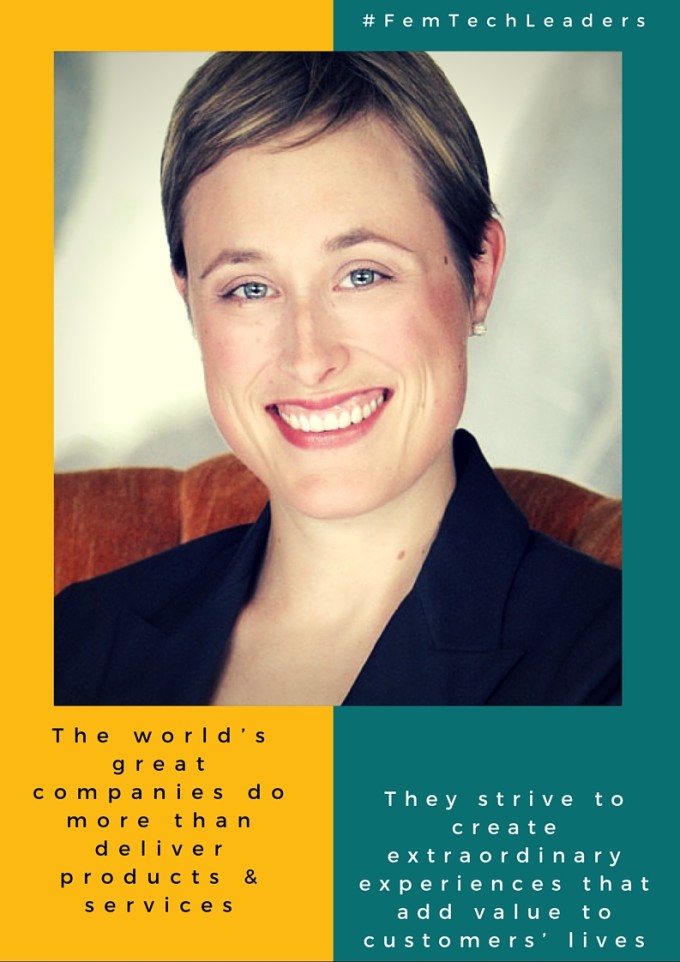
Eve Callahan
Executive Vice President, Corporate Communications at Umpqua Bank
Portland, Oregon
@umpquabank | LinkedIn Profile
You are the first classically trained Juilliard violinist we’ve interviewed. How important is a diverse background, and
in particular Liberal Arts, in establishing a strong management team with respect to banking?
Ultimately, business is about people – whether you’re trying to reach other businesses or consumers, people are at the center of both. Management teams with diverse perspectives and life experiences are better able to think creatively both about the people they lead – and the customers and communities they serve. Studying classical music at a high level is, on some level, about pursuing perfection – the sound you’re able to create on your instrument is never quite what you hear in your head. It taught me a great deal of discipline – and the ability to evaluate and critique my own work in an effort to keep getting better. That’s an invaluable tool I’ve brought with me at every stage of my career.
And a liberal arts education is about teaching people how to think – how to identify areas of interest and connections between subjects and pursue them. I use those skills every day and believe they’ll become more and more important as companies seek to differentiate themselves through innovative and intuitive user design.
Umpqua Bank is highly recognized as a leading example of a successful community bank. What makes Umpqua unique in your opinion?
Umpqua has a one-of-a-kind vision – to be the World’s Greatest Bank. It’s not a tagline or marketing slogan but what we aspire to be. It’s inspires our culture – and drives each of us to think differently, to push ourselves, to strive to be even better today than we were yesterday.
How important is Social Media in Umpqua’s community strategy approach?
Social media is an incredibly important part of how Umpqua engages and connects with our customers and communities. It’s a powerful way to listen and develop a real-time understanding of what’s important to your customers and then respond. We have a unique approach to banking – our stores are designed to be community hubs, welcoming places for people to attend an event, host a meeting, hang out. Social media is an extension of our stores and a way to activate those values in a different space.
What makes Umpqua different in your approach to bank branches and community engagement?
First of all, while we have more than 350 locations in five states, we don’t have any branches. Our locations are stores – they’re designed as inviting, comfortable spaces that add value to the communities they’re in beyond banking. Everyone is welcome – customers or not – and you’ll find events of all kinds, from movie nights and yoga classes to business meetings and non-profit gatherings.
Our approach to community engagement is similar. We strive to make a meaningful difference in the communities we serve and to empower our associates to be actively engaged. Our Connect Volunteer Network gives every associate up to 40 hours of paid time off to volunteer – and on average more than 75% of Umpqua associates participate every year. And even our community grants program is designed to empower our people – the grants committee is open to every associate and currently more than 150 are actively involved in helping us determine where to give back financially.
You mentioned 3 simple truths with respect to how you believe banks should engage with consumers: 1) Treat them well; 2) Focus on Convenience, & 3) Change as people do. Can you expand on these?
This is a central part of Umpqua’s approach and strategy. The world’s great companies do more than deliver products and services – they strive to create extraordinary experiences that add value to customers’ lives – and that people want to come back for. That’s what we’re focused on at Umpqua. And in many ways it comes back to paying attention to people. Even as technology transforms consumer behavior and what convenience looks and feels like, a few simple questions are often a good starting point: How do you like to be treated? What are the experiences that stand out to you – and why? How can you apply that thinking to your business or division? If you continue to ask these questions of yourself and your customers, it helps you adapt as people do.
How important has the support system of your family been with respect to your personal career success?
My family is an enormously important part of my professional success. I was lucky to have two incredibly talented, smart, accomplished women as grandmothers – women who combined work and family long before it was the norm. And my parents reinforced that idea for me throughout my childhood – both in the example of how they worked together to balance careers and family, and in their clear message to me that I could do anything I set my mind to.
But I couldn’t do what I do without the support of my husband. He understands and supports my work and the time and energy it often demands in countless ways large and small….even when it means he’s stuck doing the laundry, again!
What do you see as the 3 leading future trends for FinTech?
There’s a lot of talk about big data and the tremendous role it will have in all aspects of business in the future. I agree. I also believe that user design – using technology to create customer experiences that are smart and intuitive but also delightful – will be a huge differentiator in the future.
About Umpqua Bank:
Recognized nationally and internationally for its unique store concept, customer experience and culture, Umpqua
Bank is the West Coast’s largest community bank. We offer the sophisticated products and services of a large bank, but strive to deliver them differently – with the engagement and access of a community bank and the customer experience of the world’s great retailers.

© 2015 | FemTech Leaders
Start the conversation